
Pallet Terminology Guide: Common Pallet Terms Explained
Ordering the right pallet starts with understanding the language used to describe it. Terms such as stringer, four-way entry, racking load, and heat-treated communicate details that can affect how a pallet performs throughout your supply chain.
Whether you are reviewing a quote, updating a purchasing specification, or discussing a warehouse challenge, a shared understanding of pallet terminology helps everyone work from the same expectations.
This guide explains common pallet terms and why they matter when choosing, handling, and purchasing wood pallets.
Pallet Terminology Basics and Common Designs
-
Pallet
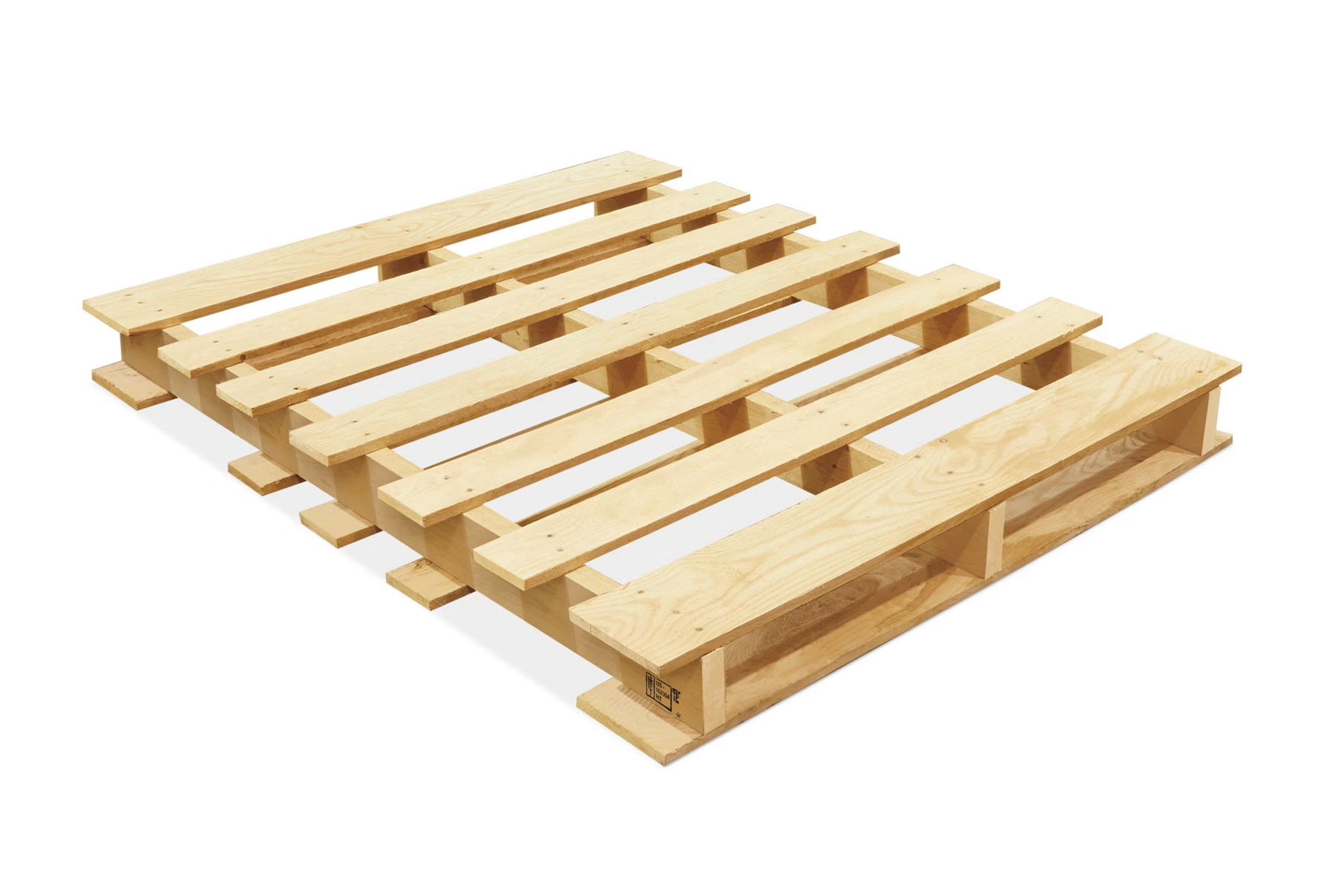
A pallet is a portable platform used to support goods during handling, storage, and transportation. Its design allows compatible equipment to lift and move the pallet and its load together.
Pallets can be made from wood, plastic, metal, and other materials. The appropriate choice depends on the product, handling environment, shipping requirements, and intended service life.
-
Skid
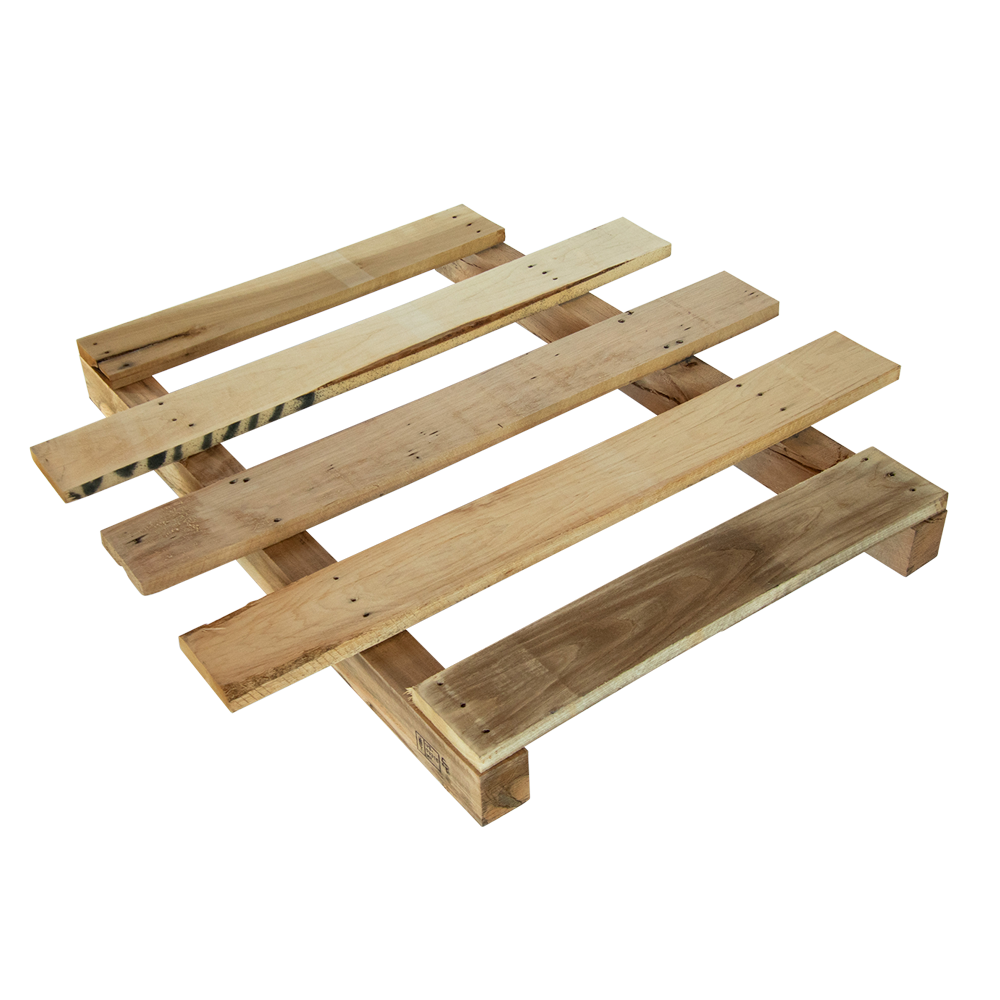
A skid is generally a platform with a top deck supported by runners, without a bottom deck. Although “skid” and “pallet” are often used interchangeably, the difference in construction can affect handling and equipment compatibility.
When requesting a skid, provide a drawing or construction details so your supplier understands exactly what you need.
-
Unit Load
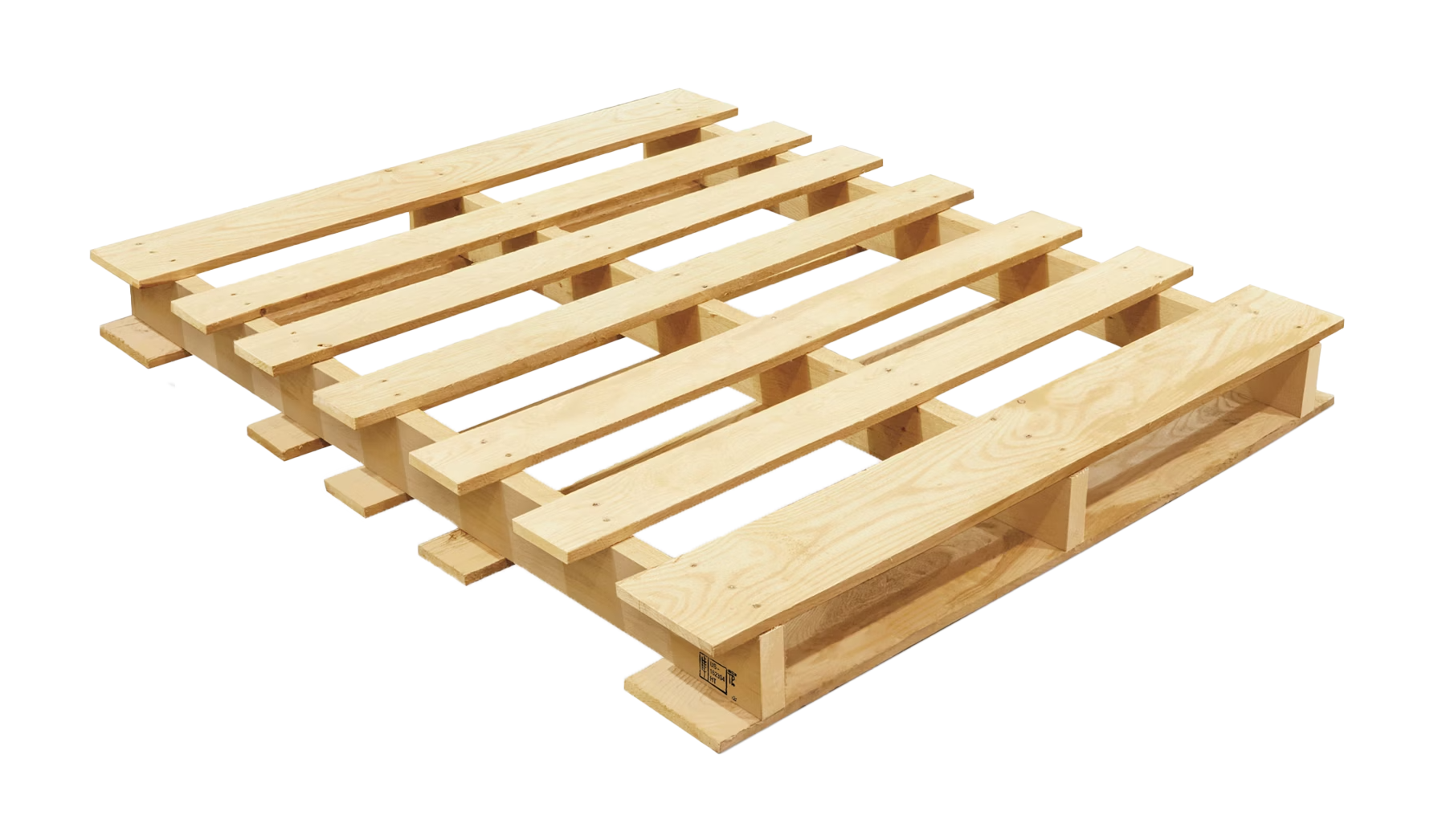
A unit load combines the goods, pallet, and any securing materials into one assembly for handling and transportation. Stretch wrap, strapping, slip sheets, and protective packaging may all be part of the unit load.
Evaluating the complete unit load helps identify issues that may be missed when considering the pallet alone.
-
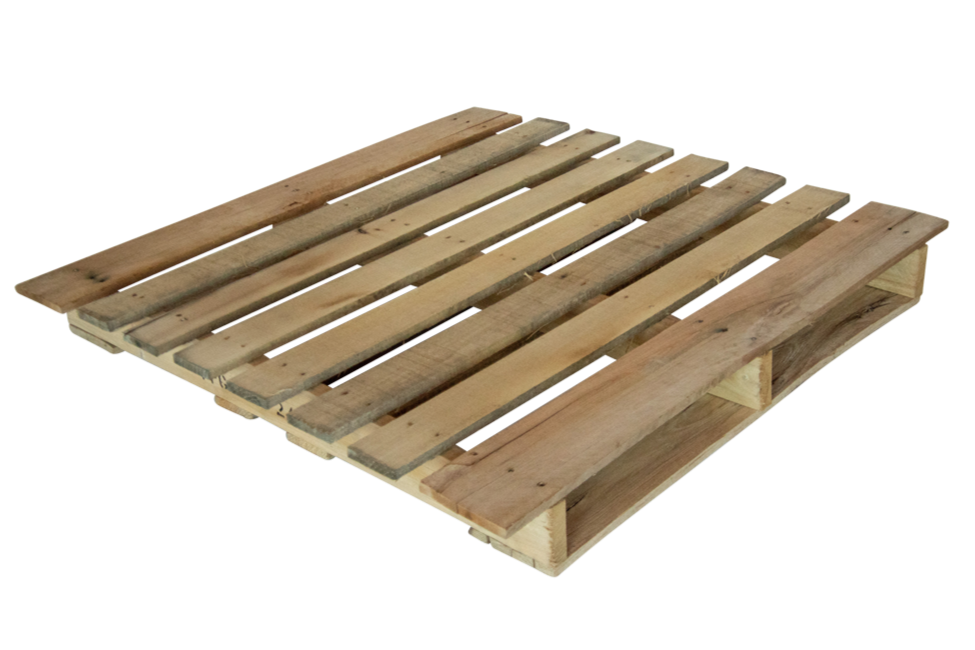
Stringer Pallet
Description goA stringer pallet uses parallel longitudinal members, called stringers, to support its deckboards. Stringers may be solid or notched to provide additional fork access.
Stringer construction is common in wood pallets, but the number, size, and placement of components vary by design.
-
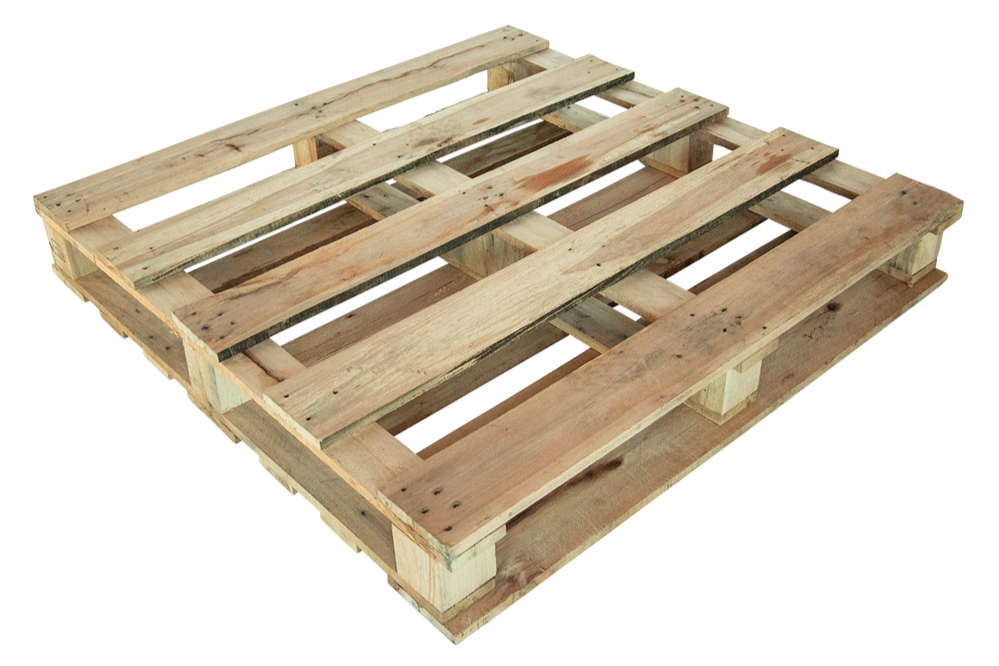
Block Pallet
Description A block pallet uses blocks to support its decks. Stringerboards typically connect the blocks and support the top deckboards.
Many block pallet designs provide four-way entry. Actual compatibility still depends on the pallet’s openings and the equipment being used
-
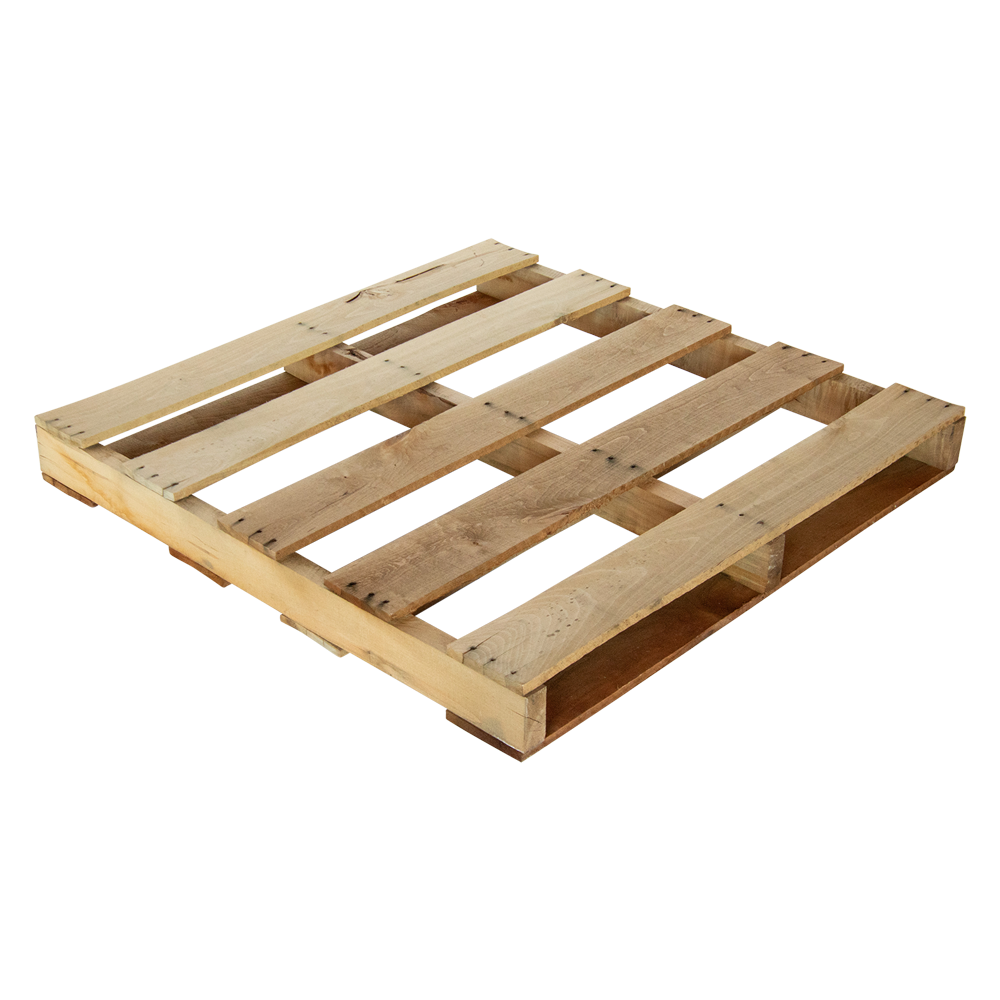
Two-Way Entry
A two-way entry pallet allows fork entry from two opposite ends. This can affect how pallets must be positioned on a dock, trailer, or production line.
-
Four-Way Entry
A four-way entry pallet allows fork entry from all four sides. This can provide greater flexibility when maneuvering loads.
However, four-way forklift access does not automatically mean a pallet jack can enter and operate from every side. Bottom deck configuration and opening dimensions also matter.
-
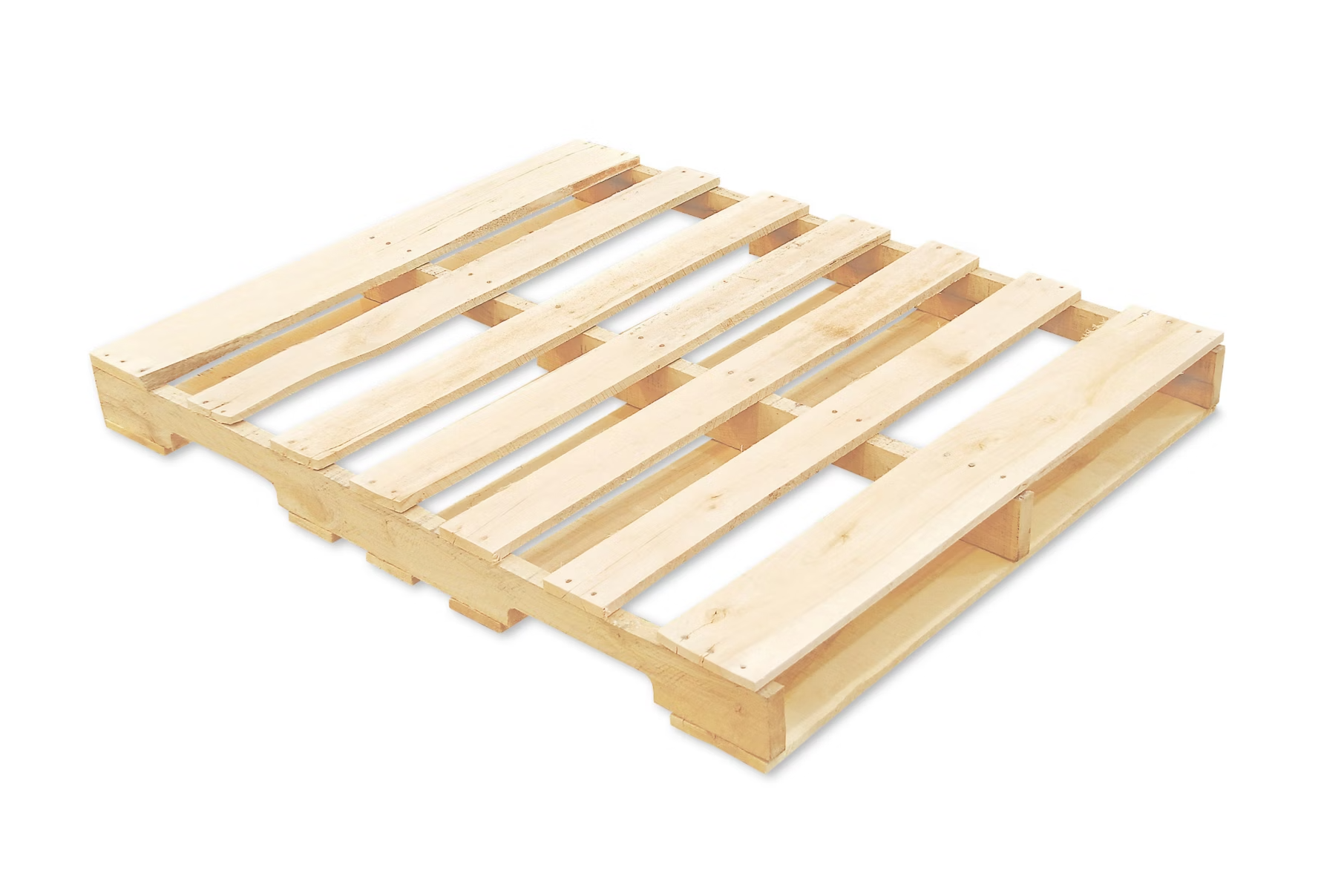
Partial Four-Way Entry
A partial four-way entry pallet typically has notched stringers that allow forklift entry from all four sides, while pallet jack entry is generally limited to two directions.
If your operation uses both forklifts and pallet jacks, include both equipment types in your pallet specification.
-
Single-Face and Double-Face Pallets
A single-face pallet has one deck. A double-face pallet has both a top and a bottom deck.
The presence of a bottom deck can affect load distribution, stacking, and compatibility with handling systems.
-
Reversible Pallet
A reversible pallet is designed so either face can serve as the load-bearing top deck. A double-face pallet is not necessarily reversible; some bottom decks are not designed to support the product.
-
GMA Pallet
GMA refers to the Grocery Manufacturers Association. In pallet purchasing, “GMA pallet” commonly describes a 48-by-40-inch wood pallet associated with grocery and consumer goods distribution.
The term alone does not establish every construction detail or load rating. Confirm the design, condition, and performance requirements rather than relying only on the name.
Parts of a Wood Pallet
-
A. Deckboards
Deckboards form the top or bottom surface of a pallet. Top deckboards support the product, while bottom deckboards help connect the structure and transfer loads to supporting surfaces.
Their thickness, width, spacing, and attachment all influence pallet performance.
-
B. Lead Boards
Lead boards are the deckboards located at the outer ends of the deck, where handling equipment commonly approaches the pallet.
Because they are exposed to repeated contact during handling, their condition is especially important during inspection.
-
C. Stringers
Stringers are the longitudinal structural members in a stringer pallet. They support the deckboards and help carry the load.
A damaged stringer can compromise pallet performance even when the top deck appears intact.
-
D. Stringerboards
Stringerboards are horizontal members used in block pallet construction. They connect blocks and provide support for deckboards.
Although the names sound similar, stringers and stringerboards describe different components.
-
E. Blocks
Blocks are structural supports between the decks of a block pallet. Their dimensions, material, and placement contribute to the pallet’s overall design and entry openings.
-
F. Notches
Notches are cutouts in stringers that provide access for forklift tines from the sides of a pallet.
The presence of notches does not guarantee compatibility with every piece of handling equipment.
-
G. Fasteners
Fasteners hold pallet components together. Nails are commonly used in wood pallets, and their dimensions, design, placement, and installation influence joint strength and durability.
Replacing a missing fastener with an arbitrary nail may not restore the original connection performance.
-
H. Deck Spacing
Deck spacing is the gap between adjacent deckboards.
Spacing matters when supporting small packages, bags, or products that may bend or settle into openings. Two pallets with the same outside dimensions can provide different levels of product support.
-
I. Chamfer
A chamfer is a beveled edge on a pallet component. Chamfers on bottom deckboards can help pallet jack wheels move across the boards during entry or withdrawal.
-
J. Wing
A wing is a portion of a deckboard that extends beyond the outside stringer or stringerboard.
A pallet wing is part of the pallet’s construction. It should not be confused with product overhang.

Pallet Dimensions and Load Terminology
-
Length, Width, and Height
Pallet dimensions are generally expressed as length by width, with height provided separately or as a third measurement.
For stringer pallets, length is measured in the direction of the stringers. Because orientation can cause confusion, drawings should identify fork entry and component direction.
Always specify the unit of measurement.
-
Nominal and Actual Dimensions
Nominal dimensions are the names or stated sizes used to describe materials. Actual dimensions are the measured dimensions of the finished component.
When a component’s thickness or width is critical, use actual measurements and agreed tolerances in the specification.
-
Load Capacity
Load capacity describes the load a pallet can support under specified conditions.
A useful capacity statement identifies the load arrangement, support conditions, and handling environment. A pallet suitable for floor storage may not be suitable for supporting the same weight across an open rack span.
-
Static Load
A static load is a load supported while the pallet is stationary. In purchasing discussions, static capacity often refers to a loaded pallet resting on a fully supporting floor or similar surface.
Confirm the intended support condition rather than assuming “static” covers every stationary storage arrangement.
-
Dynamic Load
A dynamic load refers to a load handled while the pallet is being moved.
Forklift handling, acceleration, stopping, and repeated use introduce conditions that differ from a pallet resting on the floor. A quoted dynamic rating should be understood in the context of the supplier’s design or testing assumptions.
-
Racking Load
A racking load is supported while the pallet spans between rack supports. The direction and distance of that span are important.
Pallet racking performance must be evaluated for the actual rack configuration and load. A floor-storage rating should not be substituted for a racking rating.
-
Load Distribution
Load distribution describes how weight is spread across the pallet.
Uniformly distributed cartons place different demands on a pallet than a machine supported by four small feet. Total product weight is only one part of the specification.
-
Overhang and Underhang
Product overhang occurs when goods extend beyond the pallet’s edges. Underhang occurs when the goods occupy a smaller footprint than the pallet.
Overhang can expose products to damage. Underhang can affect packaging support and how weight is transferred through the pallet. The complete load arrangement should be reviewed.
New, Recycled, and Repaired Pallet Terminology
-
New Pallet
A new wood pallet is manufactured using new components. It may follow a commonly used design or be built to a customer’s specific requirements.
“New” describes its manufacturing condition; it does not establish a universal load capacity.
-
Recycled or Used Pallet
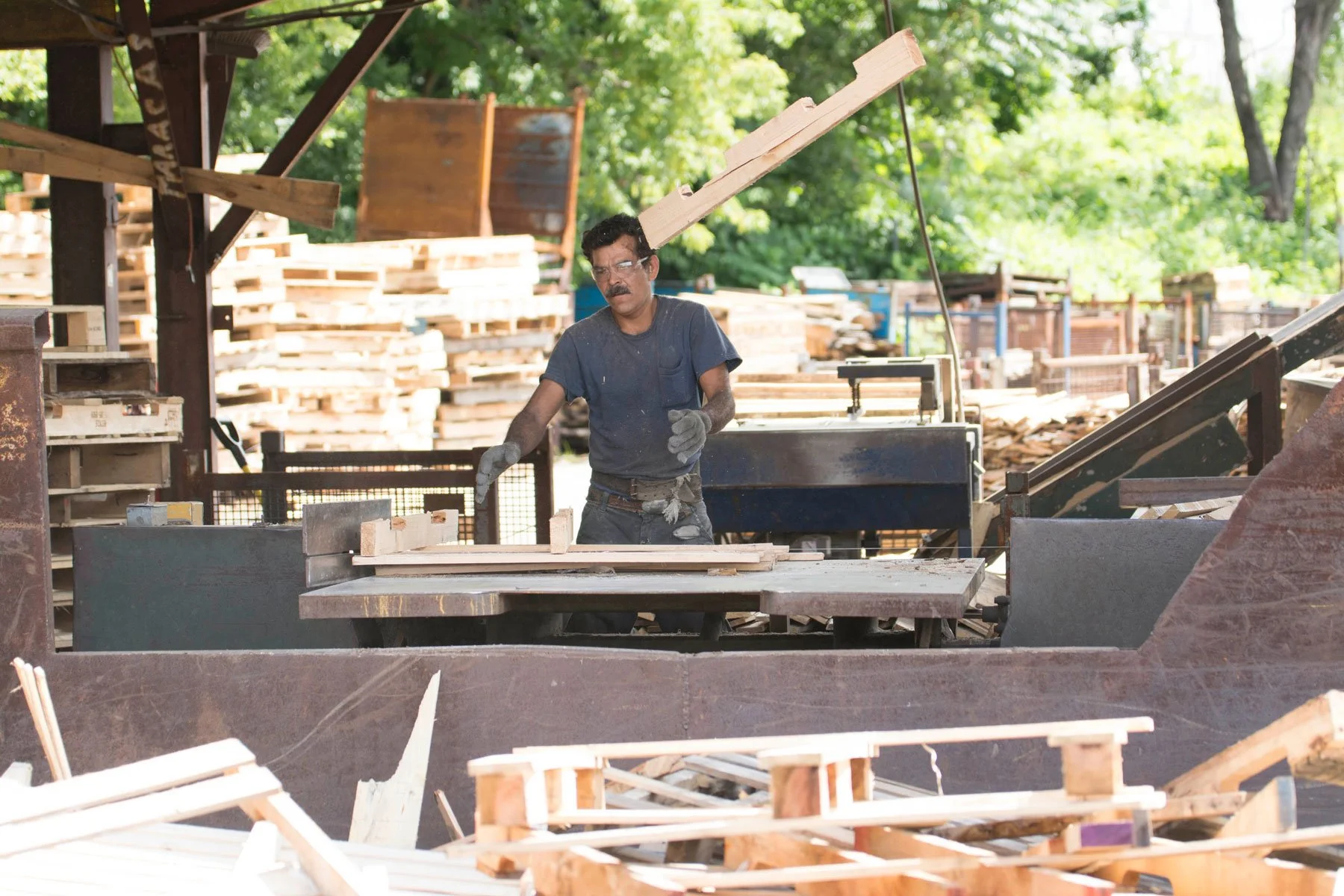
A recycled or used pallet has already been in service and has been recovered for further use. It may be sorted, inspected, and repaired before resale.
Confirm the supplier’s condition and repair criteria when comparing recycled pallet quotes.
-

Repaired or Reconditioned Pallet
A repaired pallet has had damaged or missing components repaired or replaced to return it to an agreed usable condition.
“Reconditioned” is also used commercially, but the work included can vary. Ask what inspections and repairs are covered.
-

Remanufactured Pallet
A remanufactured (repaired) pallet is assembled using recovered components and may also include new material.
This differs from repairing an existing pallet. Remanufacturing involves assembling a pallet to a specified construction using available components.
-
Pallet Core
A pallet core is a recovered pallet intended for evaluation, repair, reuse, or material recovery.
Not every core can be economically repaired, and a core should not be assumed ready for loaded service.
-
Grade A/#1 and Grade B/#2
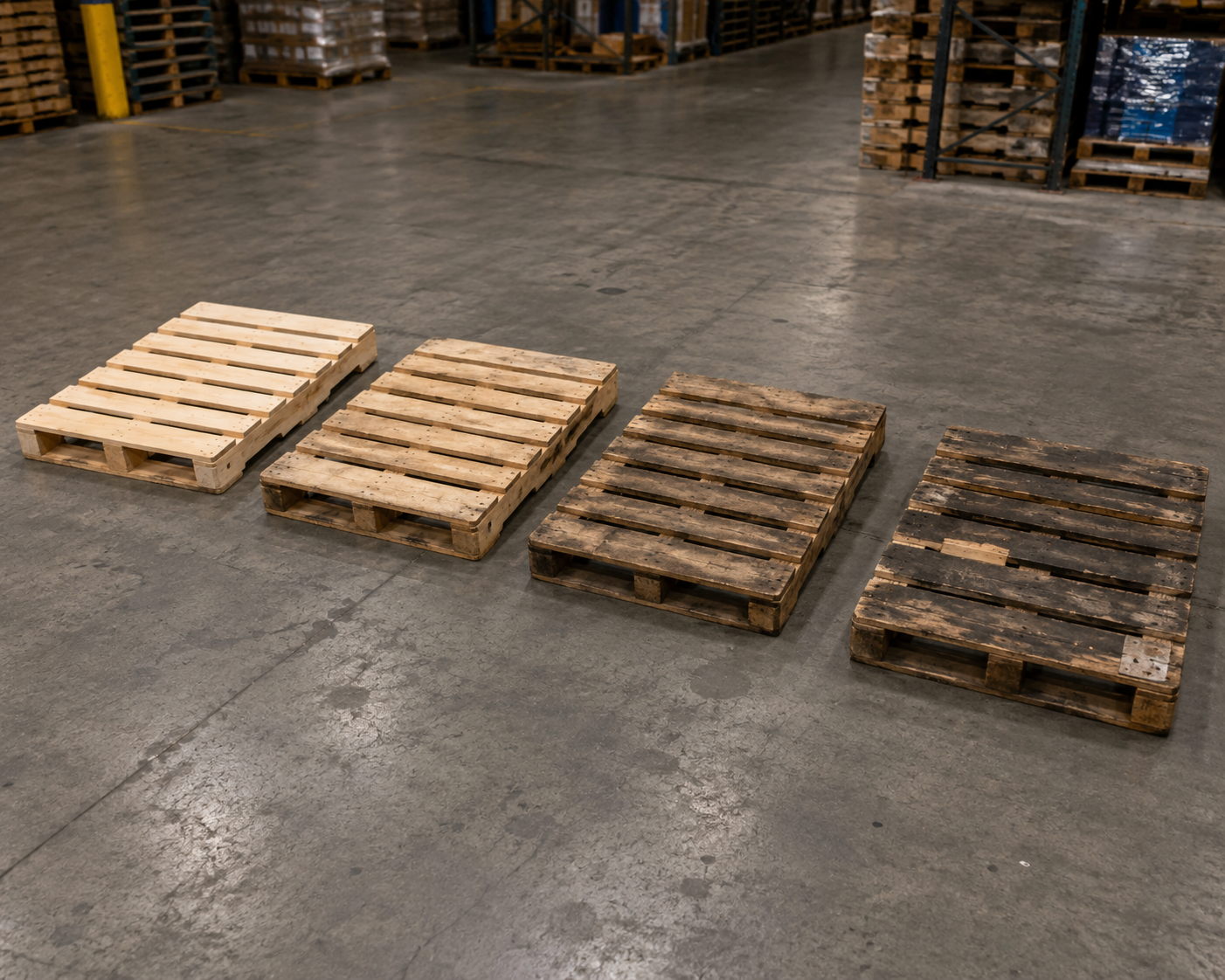
These labels (grades) commonly describe categories of recycled pallet condition. Grade A/#1 generally indicates a higher condition category than Grade B/#2 within a supplier’s grading system.
However, the labels do not provide a complete specification. Repair methods, appearance, component consistency, and acceptance criteria can differ among suppliers.
Ask for written grading criteria, particularly if your customer or handling system has specific requirements.
Wood, Treatment, and Export Terminology
-
Hardwood and Softwood
Hardwood and softwood identify botanical groups rather than guaranteeing how physically hard or strong a piece of lumber will be.
Species, component dimensions, moisture content (leading to mold), and construction all contribute to pallet performance. Material selection should be based on the application.
-
Moisture Content
Moisture content describes the amount of water in wood relative to its oven-dry weight.
Moisture affects pallet weight and dimensional behavior. If moisture control matters for your product or process, define the requirement and measurement method with your supplier.
-
Kiln-Dried Lumber
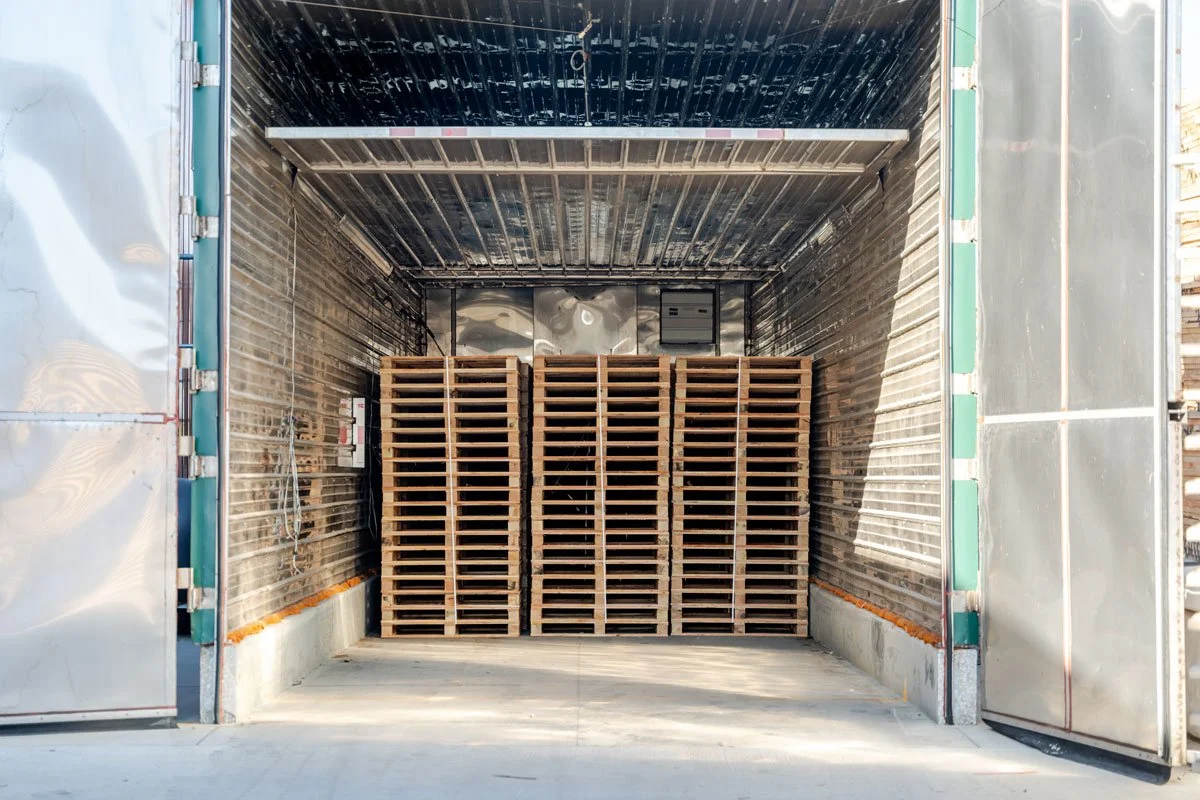
Kiln-dried lumber has undergone a controlled drying process to reduce moisture.
Kiln drying and phytosanitary heat treatment have different objectives. A kiln-dried designation alone does not demonstrate that wood packaging meets ISPM 15 treatment and marking requirements. The IPPC’s explanatory guidance explains this distinction.
-
Heat Treatment and HT
Heat treatment uses a specified time and temperature process to address wood pests. For conventional ISPM 15 heat treatment, wood must reach at least 56°C throughout its profile, including the core, for at least 30 continuous minutes.
Compliant wood packaging must also be produced and marked through the appropriate official program. Treatment alone is not the full compliance process.
-
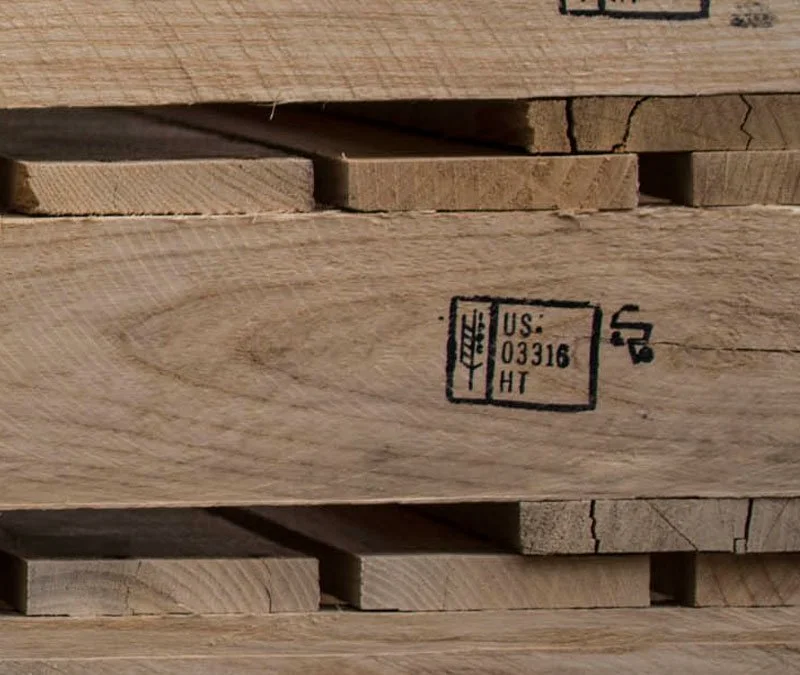
ISPM 15
ISPM 15 is an international standard addressing phytosanitary risks associated with wood packaging material in international trade.
It concerns pest risk and approved treatment and marking requirements. It does not establish a pallet’s structural load capacity. Confirm the requirements for the destination and shipping route.
-
IPPC Mark
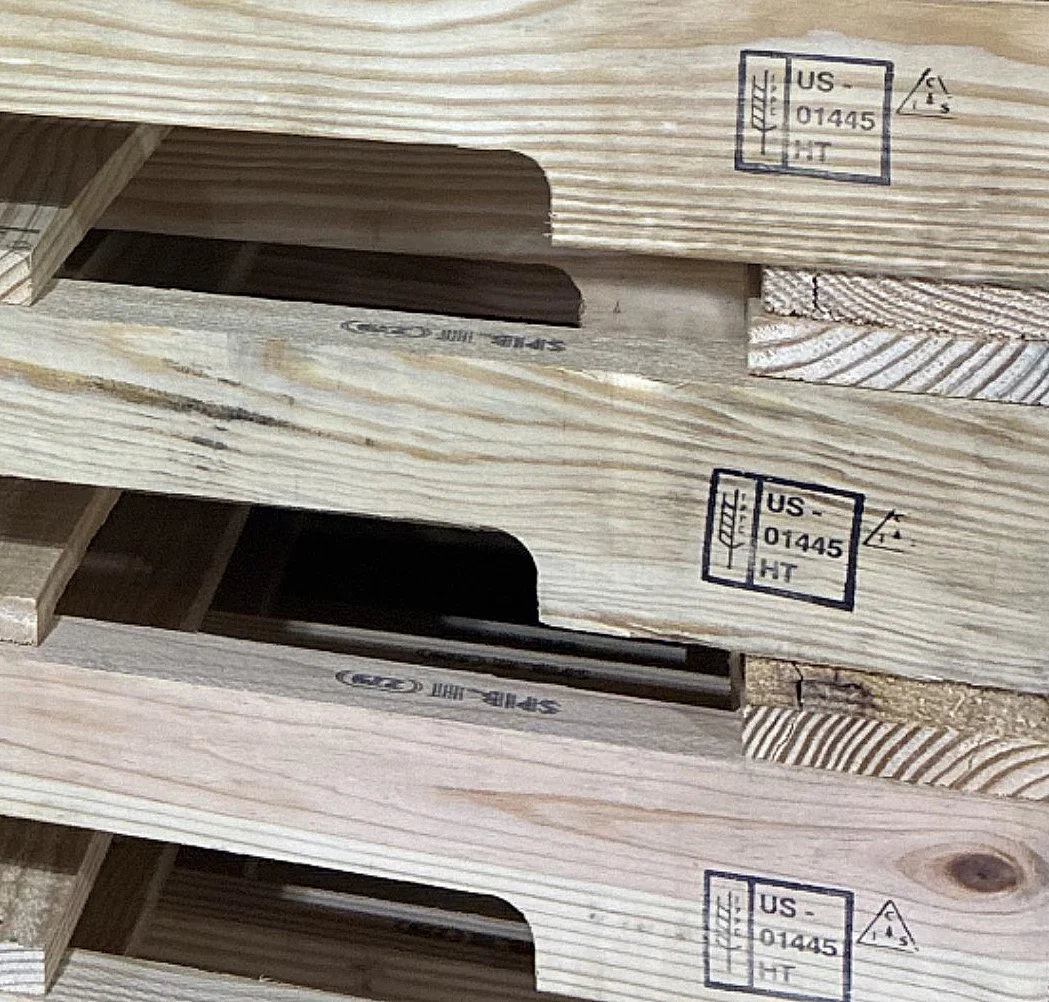
According to USDA APHIS marking guidance, the official ISPM 15 mark includes the IPPC symbol, country code, producer or treatment provider identification, and treatment code.
The mark communicates treatment compliance under the official system. It does not certify cleanliness, food suitability, or load capacity.
-

Wood Packaging Material and Dunnage
Wood packaging material, often abbreviated WPM, includes items such as wood pallets, crates, and blocking used to support, protect, or carry cargo.
Dunnage is material used to secure or support cargo. Solid wood dunnage may be subject to phytosanitary requirements in international shipments. For more information, please reference USDA APHIS import guidance.
Using Pallet Terminology in a Quote Request
A request for “standard pallets” leaves several important questions unanswered. A more useful request connects the pallet to its actual job.
For example:
“We need 48-by-40-inch wood pallets for a 1,500-pound load of uniformly arranged cartons. The pallets will be moved by forklift and pallet jack, stored on the floor, and shipped domestically. Please quote suitable new and recycled options and identify construction, condition, and handling assumptions.”
If the pallets will be stored in racks, add the rack support direction and span. If they will be exported, identify the destination and treatment requirements. Include customer specifications, drawings, and automated equipment requirements when available.
This information gives your supplier a stronger starting point than dimensions and weight alone.
Frequently Asked Questions
-
No. Component dimensions, materials, fasteners, condition, load distribution, and support conditions all influence performance.
-
Not necessarily. Entry openings and bottom deck construction must be compatible with the equipment. Confirm access from the directions your operation requires.
-
An HT designation identifies a phytosanitary treatment. It is not a structural strength rating and should not be used as evidence of load capacity.
-
No. Commercial grading labels can vary. Compare the actual condition and repair requirements behind the grade.
Get Help Specifying the Right Pallets
Understanding pallet terminology makes it easier to explain what your operation needs. Matching those requirements to a suitable pallet design is the next step.
Olympic Forest Products can help review your product, handling equipment, storage conditions, and shipping requirements. Explore our custom pallet services or unit load design and analysis to start a conversation about your pallet specifications.