What are Pallet Grades?
Understanding pallet grades is essential for anyone involved in shipping, warehousing, or supply chain management. Whether you're selecting pallets for your business or need to understand the quality standards of your inventory, knowing how pallet grades work will help you make better decisions and manage costs effectively.
Introduction to Pallet Grades
Pallet grades are standardized classifications that indicate the condition, quality, and suitability of pallets for various applications. These grades help businesses and logistics professionals quickly identify what level of service a pallet can provide, from brand-new condition to heavily recycled materials.
The concept of pallet grades emerged from the need to standardize the used pallet market. As pallet reuse became more common, buyers needed a way to assess quality without inspecting every single unit. Today, pallet grades are recognized across the industry and provide a common language for pallet suppliers, logistics companies, and end-users.
The Main Pallet Grades Explained
Pallet grades typically follow a standardized classification system. While exact terminology may vary between suppliers, most use a tier system from highest to lowest quality. Here's what you need to know about each pallet grade:
Grade A (New/Like-New Pallets)
Grade A pallets represent the highest quality pallet grade available. These pallets are either brand new or in like-new condition with minimal to no visible wear, damage, or staining. Grade A pallet grades are ideal for:
Food and beverage industries with strict hygiene standards
Pharmaceutical and medical supply shipments
Electronics and high-value goods
Customers where appearance matters
Grade A pallets typically cost more but provide superior performance and durability for multiple trips.
Grade B (Good Condition Pallets)
Grade B pallet grades represent pallets in good, usable condition with minor wear and cosmetic damage that doesn't affect structural integrity. These pallets may have slight discoloration, minor nail damage, or light staining but remain fully functional.
Grade B pallet grades are popular because they offer a balance between cost and quality, making them suitable for:
General manufacturing and distribution
Standard warehousing operations
Most domestic shipping applications
Businesses looking to optimize shipping costs
Many companies choose Grade B pallet grades as their standard for day-to-day operations, as they provide excellent value without premium pricing.
Grade C (Fair Condition Pallets)
Grade C pallet grades are in fair condition and show visible wear, including multiple cosmetic issues, weathering, or minor structural concerns that don't compromise safety or function. Pallets at this pallet grade level may have loose boards, faded markings, or noticeable stains.
Grade C pallet grades work well for:
Internal warehouse use and transfers
Heavy-duty industrial applications
Storage of non-sensitive items
One-way shipping scenarios
Operations where appearance is not important
These pallet grades offer significant cost savings while maintaining adequate functionality for many applications.
Grade D (Heavy Wear/Recycled Pallets)
Grade D pallet grades represent heavily worn, recycled, or repurposed pallets with significant visible damage. These pallets are still structurally sound and safe but show extensive wear, multiple nail holes, major staining, and weathering.
Grade D pallet grades are suited for:
Industrial use where durability trumps appearance
Storage of heavy, non-sensitive materials
One-time use applications
Cost-conscious operations with minimal aesthetic requirements
Grade D pallet grades offer the lowest cost option and are often used for in-facility movements and temporary storage.
6 Factors That Determine Pallet Grades
Several key factors influence how pallet grades are assigned:
Structural Integrity: The foundation of any pallet grade assessment is whether the pallet can safely carry and support its load. Inspectors check for cracked boards, broken stringers, and compromised weight capacity.
Surface Condition: Staining, discoloration, weathering, and cosmetic damage all factor into pallet grade determination. Different industries have different sensitivity to these issues.
Cleanliness: Pallet grades are partly determined by the presence of dirt, oils, chemicals, or other residue. Industries like food and pharmaceuticals require higher pallet grades specifically for cleanliness.
Nail and Hardware Condition: Protruding, missing, or damaged nails and fasteners affect both the pallet grade and safe handling. Pallet grades reflect the effort needed to make a pallet safe.
Dimensions and Specifications: Pallets that deviate from standard dimensions or have missing deck boards may receive lower pallet grades, depending on how these issues impact usability.
Repairability: The cost and feasibility of repairs influence pallet grades. Pallet grades assigned to damaged units consider whether repairs are economical.
5 Ways Pallet Grades Impact Your Supply Chain
Choosing the right pallet grade for your application directly affects your supply chain efficiency and costs:
1. Cost Considerations
Pallet grades directly correlate with pricing. Understanding your actual needs helps you select appropriate pallet grades without overspending on unnecessary quality.
2. Durability and Reuse
Higher pallet grades withstand multiple trips and longer service life. If you plan to reuse pallets, investing in better pallet grades may save money long-term.
3. Industry Compliance
Certain industries require specific pallet grades. Food, pharmaceutical, and export applications often specify minimum pallet grades for safety and regulatory reasons.
4.Customer Expectations
Your customers may have pallet grade requirements for incoming shipments. Meeting these standards maintains supplier relationships and avoids rejected shipments.
5. Sustainability
Using appropriate pallet grades supports sustainable practices. Reusing pallets at suitable pallet grades reduces waste and resource consumption compared to constantly replacing damaged units.
Rubric for Selecting the Right Pallet Grade for Your Business
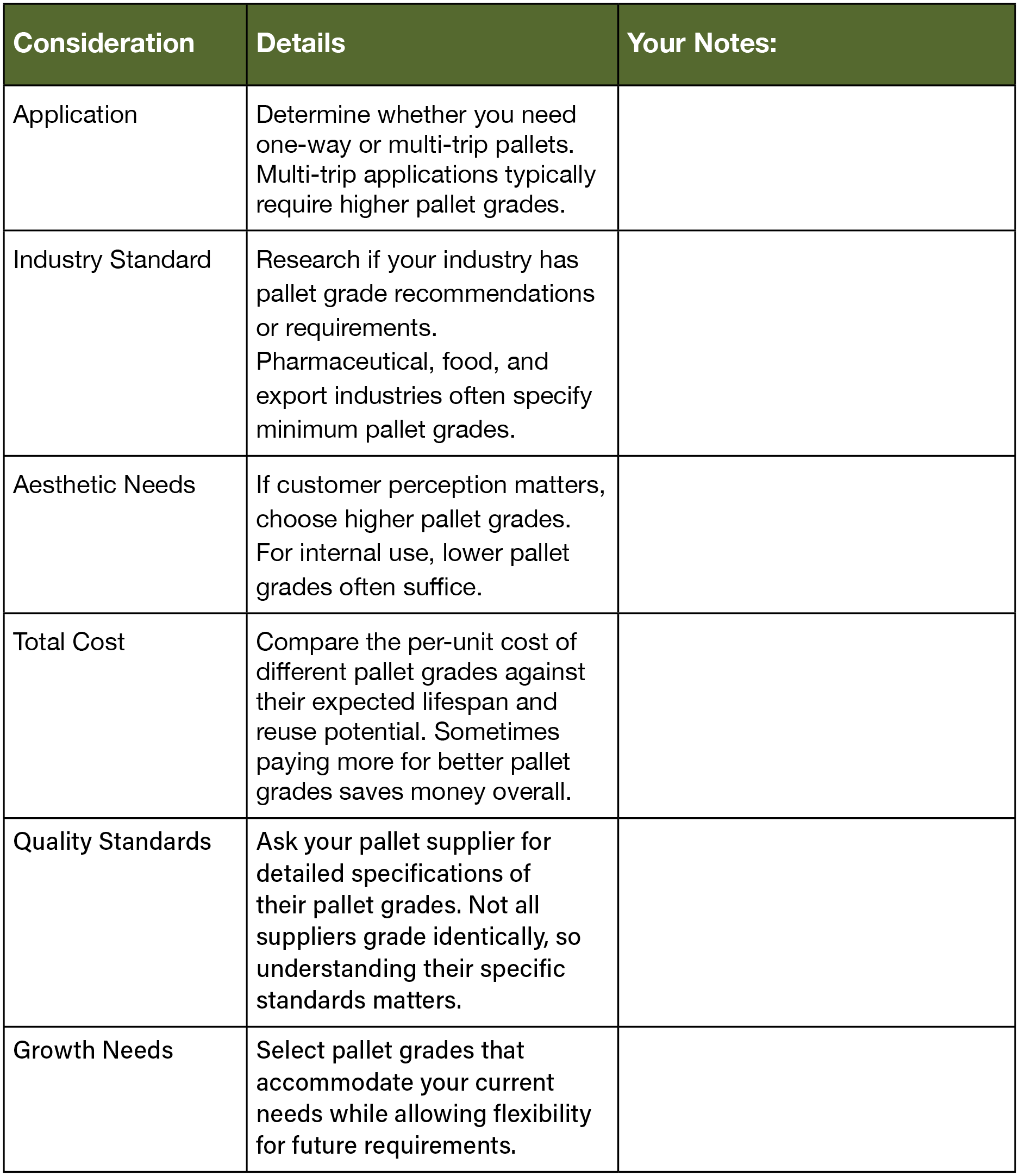
Choosing appropriate pallet grades requires understanding your specific needs and working with a pallet company that understands the industry. Consider the below rubric and take it to your pallet company to ensure you are covering your bases with what your needs are:
Dispelling 4 Common Misconceptions About Pallet Grades
Several myths about pallet grades persist in the industry. Here's what you should know:
Myth #1: All suppliers use identical pallet grades.
While standards exist, pallet grade definitions vary between suppliers. Always verify specific criteria with your supplier.
Myth #2: Lower pallet grades are always unsafe.
Grade C and D pallet grades are perfectly safe for appropriate applications. Safety standards are maintained across all grades.
Myth #3: Pallet grades don't affect ROI.
Selecting appropriate pallet grades significantly impacts return on investment through durability, reusability, and lifespan.
Myth #4: You should always buy the highest pallet grades.
Overspending on unnecessary pallet grades wastes money. Match pallet grades to your actual requirements.
How are Pallet Grades Standardized Across the Industry?
Several organizations help standardize pallet grades across the industry:
The National Wooden Pallet and Container Association (NWPCA) provides guidelines for wooden pallet quality and grading. Many suppliers reference these standards when establishing their pallet grades.
Additionally, the Pallet Foundation works to ensure consistent understanding of pallet grades and best practices throughout the supply chain.
Major logistics and 3PL companies have established their own pallet grade specifications to ensure consistency with their customers. These organizations often maintain detailed pallet grade documentation.
Work with a Company That Understands Your Pallet Grade Needs
Pallet grades are a critical component of supply chain management and logistics. By understanding the different pallet grades—from Grade A new pallets to Grade D recycled units—you can make informed decisions that optimize costs, meet industry requirements, and maintain operational efficiency.
However, knowing about pallet grades is only half the battle. The real value comes from working with a pallet supplier who understands your unique business needs and can recommend the right grades for your specific applications.
At Olympic Forest Products, we recognize that every business has different pallet grade requirements. Whether you're shipping high-value pharmaceuticals that require Grade A precision, managing general warehouse operations with Grade B efficiency, or optimizing costs with Grade C or D pallets for internal use, we take the time to understand your supply chain challenges.
Our team works closely with you to:
Assess your specific needs: We evaluate your shipping patterns, industry requirements, and cost constraints to recommend appropriate pallet grades.
Provide transparent grading standards: We're clear about how we classify each pallet grade, so you know exactly what you're getting.
Optimize your pallet grade selection: We help you avoid overspending on unnecessary grades while ensuring you meet all regulatory and operational requirements.
Support your long-term supply chain strategy: Whether you need consistent pallet grades for ongoing operations or flexible solutions for growing demands, we're here to help.
Rather than accepting generic pallet grade recommendations, let Olympic Forest Products partner with you to find the perfect balance of quality, durability, and cost-effectiveness for your business.
Ready to optimize your pallet strategy? Contact Olympic Forest Products today to discuss your pallet grade needs and discover how we can improve your supply chain efficiency.
FAQs about Pallet Grades
What's the difference between pallet grades and pallet types?
Pallet grades indicate condition and quality, while pallet types describe the structural design (stringer vs. block, 4-way vs. 2-way entry). A pallet can be any type in any grade.
How are pallet grades determined?
Professional inspectors assess structural integrity, surface condition, cleanliness, and hardware condition to assign pallet grades according to industry standards.
Can I mix different pallet grades in my operation?
Yes, many businesses use different pallet grades for different purposes—higher grades for customer-facing shipments and lower grades for internal use.
How do pallet grades affect shipping costs?
Pallet grades can impact shipping indirectly through durability and reusability. Better pallet grades often result in lower per-use costs over time.
Are pallet grades standardized internationally?
While general concepts are similar globally, specific pallet grade standards vary by region and country. Always verify standards for international shipments.