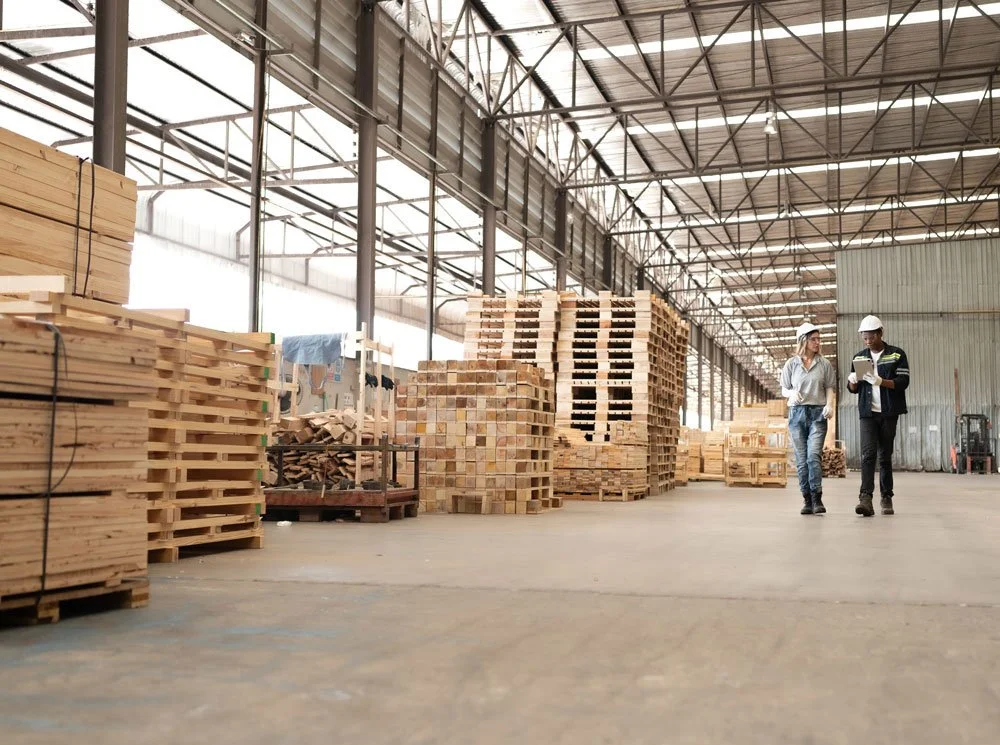
A late pallet shipment can stall a production line, inconsistent quality can damage products in transit, and a price spike with no warning can throw off a quarter's budget. If you've dealt with any of these, the problem usually isn't pallets – it's the pallet distributor behind them.
The right partner does more than ship wood on a schedule. They understand your volume, your timeline, and your standards, and they build a supply relationship around them.
In this article, we'll look at what a pallet distributor actually does, why that partnership matters more than most businesses realize, and seven tips for choosing one you can rely on long-term.
Let’s kick off with the basics.
What Is a Pallet Distributor?
A pallet distributor supplies businesses with the pallets they need to move, store, and ship products, whether that's new pallets built to standard or custom dimensions, recycled and remanufactured pallets, or a mix of both. Many also handle related services like pallet recovery, repair, and reverse logistics, picking up used pallets and putting them back into circulation.
Some distributors manufacture their own pallets in-house across one or more facilities. Others act as brokers, sourcing pallets from third-party manufacturers and reselling them. The distinction matters: a distributor that manufactures its own inventory typically has more control over quality, lead times, and pricing than one reselling someone else's product.
Why Partnering with a Pallet Distributor Matters
Pallets might seem like a low-stakes line item, but they touch nearly every part of a company's supply chain. A weak or unreliable pallet distributor can quietly cost a business far more than the price per unit suggests.
Supply chain reliability
Pallets are foundational to how products move. If a distributor can't deliver on time or in the volume you need, it doesn't just delay a shipment — it can hold up production, warehousing, and outbound orders across your operation.
Product protection
A poorly built or inconsistent pallet can fail under load, leading to damaged goods, safety incidents, or rejected shipments at the receiving end. Quality control on the distributor's side directly protects the products riding on top of their pallets.
Cost control
Pallets are a recurring expense, and pricing that swings unpredictably — or contracts that lock you into unfavorable terms — can quietly erode margins over time. A transparent, well-structured distributor relationship keeps this cost predictable.
Scalability
As your business grows or hits seasonal peaks, your pallet needs grow with it. A distributor with the capacity, facilities, and flexibility to scale alongside you prevents pallets from becoming the bottleneck that slows everything else down.
Sustainability and compliance
For businesses shipping internationally or working with sustainability-conscious customers, a distributor's sourcing practices and compliance with standards like ISPM-15 can directly affect your own compliance and brand reputation.
In short, the right pallet distributor becomes an extension of your supply chain team — not just a vendor you reorder from. Here's how to find one.
7 Tips for Choosing a Pallet Distributor
Tip #1: Evaluate Their Production Capacity and Capabilities
Start with the basics: can they actually support your volume, including the spikes? A distributor that's a perfect fit for your average month but can't flex for peak season will leave you scrambling when you need them most.
Ask about their mix of new and recycled or remanufactured pallets, and whether they can produce custom sizes or specialty pallets for unusual loads. Find out how quickly they can ramp up production if your order volume increases unexpectedly. A distributor with a narrow product range or limited manufacturing capacity may work fine today but become a bottleneck as your needs change.
Tip #2: Check Their Facility Footprint and Delivery Radius
Where a distributor manufactures matters as much as what they manufacture. A partner with multiple facilities spread across a region can typically offer shorter lead times and lower freight costs than one shipping from a single, distant plant.
Ask where their nearest facility is relative to your operations, and how that affects delivery windows and freight pricing. If you run multiple locations yourself, a distributor with a broader manufacturing footprint can simplify logistics across all of them — one point of contact instead of separate vendors for each region.
Tip #3: Ask About Wood Sourcing and Sustainability Practices
Where the lumber comes from — and how it's handled — says a lot about a distributor's reliability and values. Ask about their sourcing practices, heat treatment processes, and compliance with international standards like ISPM-15 if you ship internationally. Non-compliant pallets can result in rejected shipments at customs, so this isn't a detail to overlook.
Sustainability is also increasingly a factor in vendor selection, both for regulatory reasons and because customers and partners are paying closer attention to it. A distributor investing in responsible sourcing, wood reuse, or research partnerships around sustainable materials signals a business built for the long term, not just the next order.
Tip #4. Confirm Quality Control Standards
Pallet quality issues rarely show up until it's too late — a damaged product, a rejected shipment, a failed load in transit. Ask potential distributors how they inspect for structural integrity and how closely they hold to standard [pallet dimensions](/standard-pallet-dimensions/) and specifications. Find out what their process looks like for catching defects like loose boards, protruding nails, or inconsistent board thickness before pallets ever leave the facility.
Consistency matters as much as quality itself. If every pallet in a shipment isn't built to the same spec, it can throw off automated handling equipment, racking systems, and stacking stability. A distributor who can clearly explain their quality control process is one who's thought seriously about this part of the business.
H3: Tip #5: Understand Their Pricing and Contract Flexibility
Get clear on how pricing works before you sign anything. Ask about volume discounts, the difference between contract and spot pricing, and how they handle fluctuations in lumber costs or fuel surcharges. Transparency here prevents surprises on your invoice later, and it makes budgeting for pallet spend far more predictable.
Also look at contract terms. Long lock-in periods can leave you stuck with a partner who no longer fits your needs — whether your volume changes, their service slips, or better options come along. Look for flexibility that lets pricing and volume commitments adjust as your business does, rather than a rigid agreement written for their convenience over yours.
Tip #6: Look at Reliability and Lead Times
Ask directly about their on-time delivery track record, and how they communicate when disruptions happen — because at some point, they will. Lumber shortages, weather delays, and transportation issues are part of doing business; what separates a good distributor is how they handle them. A partner who's upfront about delays and proactive about solutions is far more valuable than one who promises perfection and doesn't deliver on it.
If possible, ask for references from companies in your industry, particularly ones with similar volume or delivery requirements. A distributor with experience serving businesses like yours will understand your constraints better than one starting from scratch.
Tip #7: Prioritize a Partner Who Offers More Than Just Pallets
The best pallet distributors don't stop at pallets. Look for partners who also offer custom crating, packaging design, or pallet recovery and reverse logistics services. Consolidating these needs with one distributor means fewer vendors to manage, fewer relationships to maintain, and more consistency across your supply chain.
A distributor who can grow with you across these services isn't just filling orders — they're functioning as a long-term partner in your operations, one who understands your business well enough to solve problems before they become disruptions.
Choose a Pallet Distributor Built for the Long Haul
Partnering with a pallet distributor is a decision that ripples through your entire supply chain — from production timelines to product protection to your bottom line. Taking the time to evaluate capacity, quality control, pricing, and reliability upfront saves you from costly surprises down the road.
Olympic Forest Products manufactures new and recycled pallets across our Ohio, Pennsylvania, and Virginia facilities, giving us the capacity and reach to support businesses of every size. From standard pallets to custom crating and packaging solutions, we're built to be a long-term partner in your supply chain — not just another vendor.
Contact us today to talk about your pallet needs or get started right away for free by requesting a quote via pallet RFP.