How a Performance Review Prevents Broken Pallets
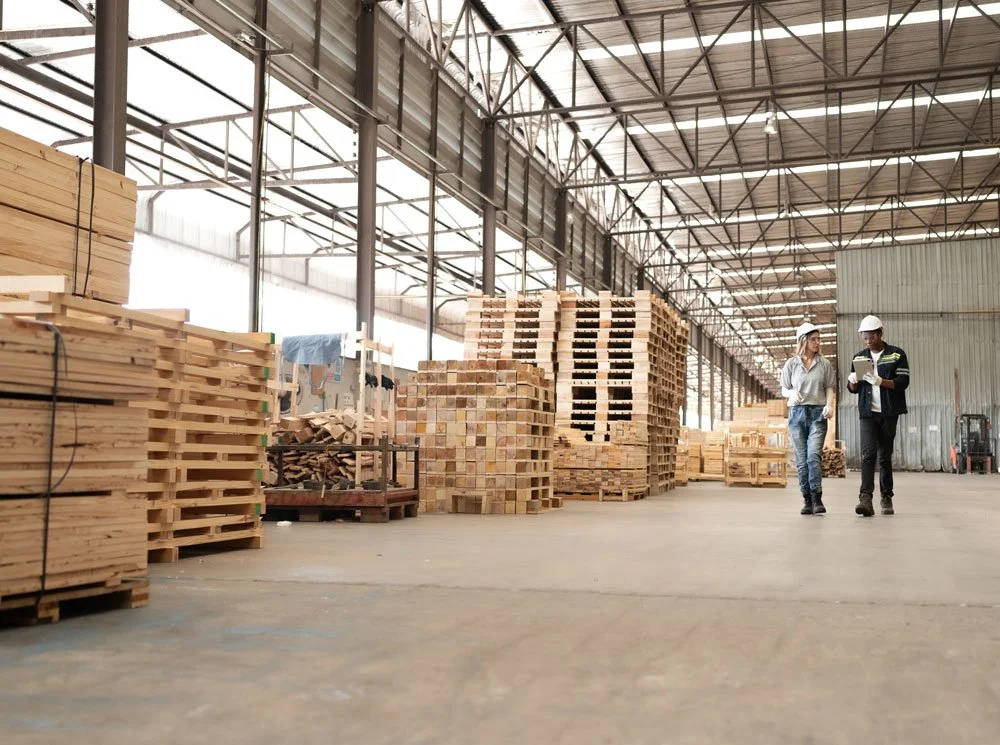
Are you dealing with pallets breaking too often, getting rejected, or driving constant replacement costs? You’re not alone.
Many businesses reach a point where the pallet program becomes a quiet but costly problem due to damaged products, slowed throughput, and teams being forced into a reactive mode.
That’s where a pallet performance review comes in.
At Olympic Forest Products, pallet performance reviews are designed to do one thing: make sure your pallets consistently hold up in your real-world conditions so you can spend less time replacing pallets, reworking loads, and chasing bids that don’t solve the underlying issue.
Common pallet pain points (and what they’re really telling you)
Most pallet conversations start with one of these:
“We have a lot of broken pallets.”
“We replace them constantly.”
“Our pallets aren’t holding up as they should.”
“We’re going out to bid and want to make sure we choose the best option.”
These are symptoms. A performance review helps identify the cause because it’s rarely just “bad pallets.”
Breakage is often tied to a combination of factors like:
Load weight and distribution (point loads vs. evenly distributed loads)
Forklift handling patterns (entry points, impacts, lift heights)
Rack type and storage method (block stacking vs. racking, beam spacing, overhang)
Stretch-wrap patterns and how loads shift in transit
Moisture exposure, temperature swings, or long dwell times
Inconsistent pallet specs across vendors or locations
When these variables aren’t accounted for, even a “cheaper” pallet becomes expensive fast.
What is a pallet performance review?
Think of a pallet performance review as a practical, operations-first evaluation of:
How pallets are being used today (not how we think they’re used)
Where failures are happening (stringers, deck boards, fasteners, corners, lead boards, etc.)
Which specs actually match the job (and which don’t)
How to reduce total cost (not just unit price)
The goal is to right-size your shipping operations by selecting the right pallet for the load, environment, and workflow.
The hidden cost of “going out to bid” without a review
Bidding can feel like the quickest path to savings, but if you’re bidding without a shared performance standard, you may be comparing apples to oranges.
One supplier quotes a pallet built for durability. Another quotes a pallet built to meet a price. Both may look similar on paper, but the results vary wildly on the floor.
A performance review helps you define what matters most, so bids are evaluated against the outcomes you need:
Lower breakage rates
Fewer emergency replacements
Better consistency across shipments
Less product damage and downtime
Why Olympic Forest Products stands out: support staff that stays involved
Many pallet programs fail not because the wood is wrong, but because the support disappears after delivery.
Our team’s biggest differentiator is our support staff, who stay engaged, help troubleshoot, and work alongside your team to keep the program running smoothly. That means:
Clear communication when needs change
Fast response when performance issues show up
Help standardizing specs across departments or sites
Guidance on optimizing design for durability without overbuilding
Ongoing accountability—so improvements stick
When a pallet is part of your production flow, you need a partner, not just a vendor.
Pallet Supplier Checklist: What to Evaluate Before You Commit
Though talking with a trusted partner can help you find the right pallet for you, this checklist can be used as a starting point during a pallet performance review or when comparing suppliers during a bid.
1) Quality
Are pallet specs documented clearly (dimensions, deck board thickness, fastener type, stringer/blocks)?
Is build consistency reliable from load to load?
Are pallets aligned with your use case (warehouse, racking, export, one-way, returnable)?
What quality controls exist to prevent variability?
2) Reliability
Can the supplier consistently meet your volume, even during peak seasons?
Do they have backup capacity or contingency plans?
Are lead times stable and realistic?
Is performance consistent across multiple deliveries and months?
3) Service
Do you get proactive recommendations, or only reactive fixes?
Is there a dedicated support team you can contact quickly?
How do they handle performance issues? Do they replace, investigate, and improve?
Do they provide documentation and follow-through after reviews?
4) Logistics (and local support)
Can they deliver on your schedule and to your dock requirements?
Are they a local supplier (or do they have local capacity) to reduce delays and freight costs?
Do they have delivery flexibility for urgent needs?
Can they support all of your locations and continue if you scale?
5) Communications
Do they respond quickly and clearly?
Is there a consistent point of contact (or support coverage when someone’s out)?
Are updates provided proactively (delays, substitutions, changes)?
Can they coordinate smoothly with purchasing, ops, and warehouse teams?
6) Systems
Can they integrate with your purchasing processes (PO workflows, scheduling, invoices)?
Do they track specs and revisions so you avoid “mystery pallets”?
Do they provide reporting or performance tracking over time?
Can they support standardization across SKUs and facilities?
Ready to reduce breakage and replacements?
If you’re dealing with broken pallets, constant replacement, or you’re heading into a bid and want confidence you’re choosing the right solution, a pallet performance review is a smart first step.
Olympic Forest Products brings more than pallets—they bring a support team that helps you solve the real problem and keep it solved.
Contact us to start your review today.