The Complete Guide to Pallet Warehousing
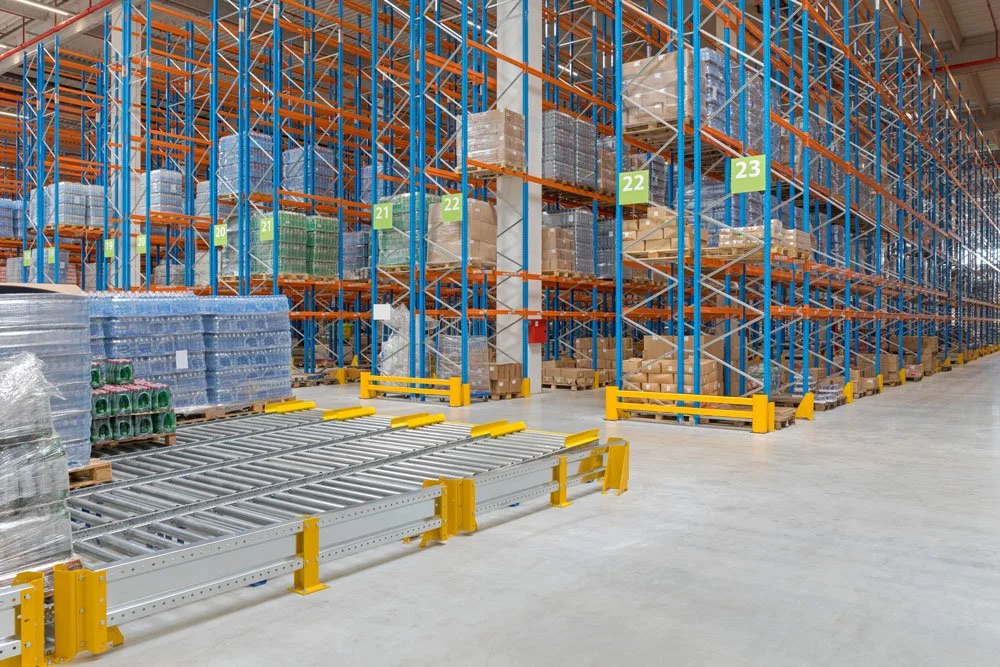
Pallet warehousing plays a foundational role in how goods are stored, protected, and moved throughout modern supply chains. While pallets themselves often receive most of the attention, how they are stored and managed in warehouses can have an equally significant impact on efficiency, safety, and cost control. From inventory flow to worker safety and space utilization, pallet warehousing influences nearly every aspect of logistics operations.
This guide breaks down what pallet warehousing is, why it matters, and how businesses can optimize their storage environments to support long-term supply chain performance.
What Is Pallet Warehousing?
Pallet warehousing refers to the organized storage, handling, and movement of palletized goods within a warehouse or distribution center. Instead of storing individual cartons or loose products, items are grouped onto pallets, allowing them to be stacked, lifted, and transported efficiently using forklifts, pallet jacks, or automated material handling systems.
At its core, pallet warehousing creates consistency. Standardized pallet sizes and layouts allow warehouses to design storage systems that maximize vertical space, streamline material flow, and reduce handling time. Whether goods are stored temporarily or held as long-term inventory, pallets provide the structural foundation that makes large-scale warehousing possible.
How Pallet Quality Affects Pallet Warehousing Performance
Pallet quality directly impacts warehouse efficiency. High-quality pallets move smoothly through racking systems, withstand repeated handling, and protect products during storage. Poor-quality pallets, by contrast, lead to frequent breakdowns, blocked aisles, and damaged goods.
Warehouses that rely on inconsistent pallet sources often spend more time dealing with repairs and disruptions than they realize. Over time, investing in durable pallets and structured repair programs reduces the total cost of ownership and improves operational stability.
Why Pallet Warehousing Is Critical to Supply Chain Efficiency
Effective pallet warehousing enables faster receiving, more accurate inventory tracking, and smoother outbound shipping. When pallets are correctly stored and matched to the warehouse’s racking and handling equipment, operations move predictably and efficiently.
Poor pallet warehousing, on the other hand, can create bottlenecks. Misaligned pallet sizes, damaged pallets, or overcrowded storage areas increase the risk of product damage, employee injuries, and delayed shipments. Over time, these inefficiencies compound—driving up labor costs, increasing downtime, and straining the entire supply chain.
In today’s environment of tight delivery windows and fluctuating demand, well-executed pallet warehousing is no longer optional; it’s a competitive advantage.
4 Common Pallet Warehousing Systems
Pallet warehousing systems are designed around space availability, inventory turnover, and the flow of products in and out of storage. Choosing the right system ensures pallets are accessible, loads are stable, and warehouse space is used efficiently.
1. Floor-Stacked Pallet Warehousing
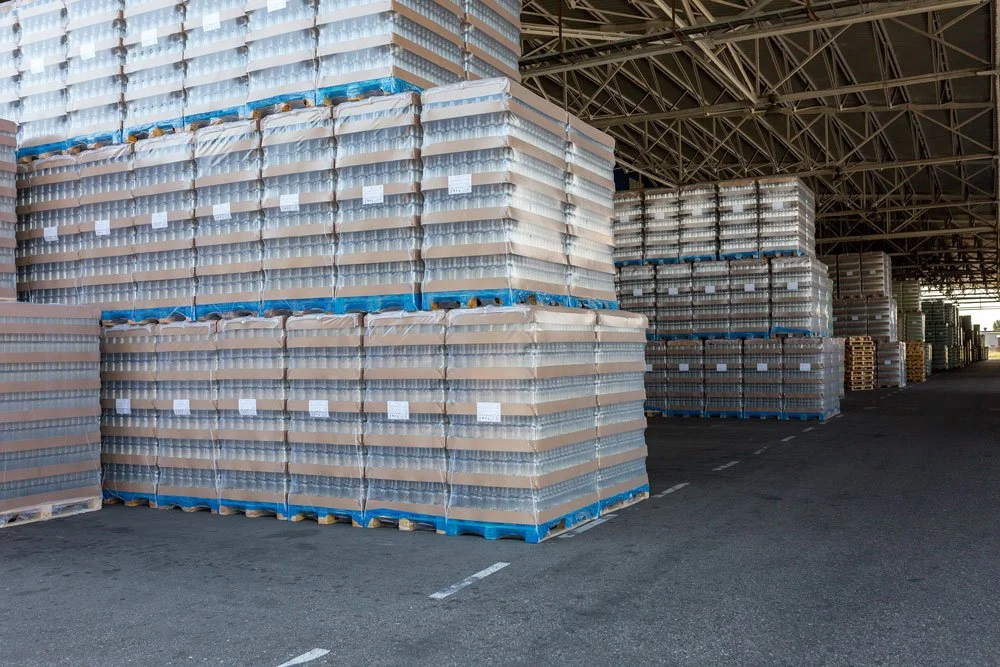
Floor-stacked palette system
Floor-stacked pallet warehousing places pallets directly on the warehouse floor in clearly defined storage zones. This system offers flexibility and low upfront cost, making it useful for short-term storage or facilities with limited racking infrastructure;0 however, because pallets cannot be stacked as high, floor stacking limits vertical space utilization and can reduce overall storage density.
2. Selective Pallet Racking Systems
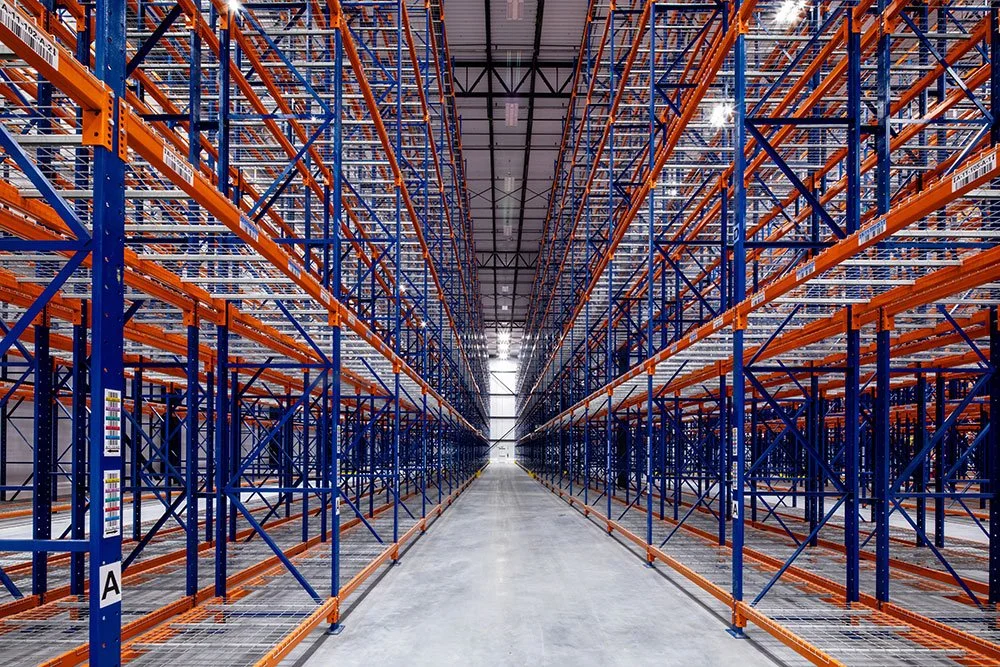
Selective pallet racking system
Selective racking is one of the most common pallet warehousing systems in use today. Pallets are stored on racks with direct access to every load, making this system ideal for operations with high SKU variety or frequent inventory rotation. Selective racking supports efficient picking, improves visibility, and works well with standard pallet sizes.
3. High-Density Pallet Racking Systems
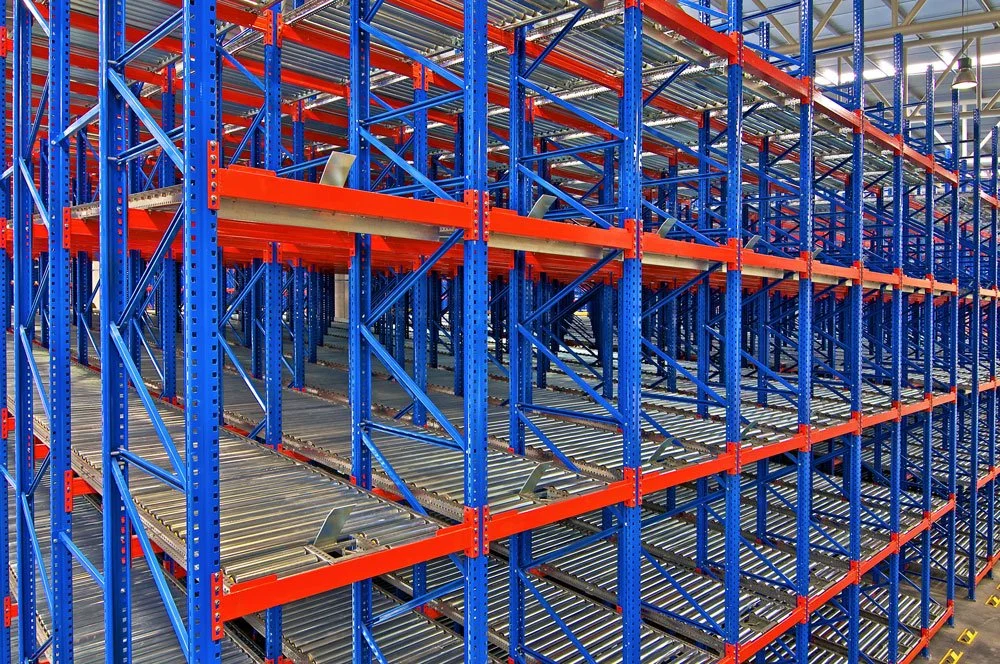
High-density pallet racking system
High-density racking systems are designed to maximize storage capacity when space is limited. These systems work best when pallets move in consistent batches, and product variety is lower. Standard high-density options include:
Drive-in and drive-through racking, which allows forklifts to enter the rack structure
Push-back racking, which uses gravity-fed carts for staged pallet storage
Pallet flow racking, which supports first-in, first-out (FIFO) inventory movement
These systems increase storage density but typically reduce direct access to individual pallets.
4. Aligning Pallets, Racking, and Equipment
The most effective pallet warehousing systems are built around alignment. Pallet dimensions, load capacity, and construction must match the racking system and material handling equipment used in the facility. When pallets, racks, and forklifts are designed to work together, warehouses see fewer disruptions, safer handling, and improved operational efficiency.
Safety and Compliance in Pallet Warehousing
Safety is one of the most critical aspects of pallet warehousing. Improperly stored pallets can lead to collapses, falling loads, or equipment damage. Warehouses must consider pallet weight limits, load distribution, and racking compatibility to maintain a safe environment for employees.
Damaged or substandard pallets pose a particularly high risk. Cracked deck boards, missing stringers, or warped pallets can compromise racking stability and increase the likelihood of accidents. Regular pallet inspections and prompt removal of damaged units are essential to maintaining a safe warehouse.
Pallet warehousing also intersects with compliance requirements, especially in regulated industries like food, pharmaceuticals, and chemicals. Clean storage conditions, proper pallet treatments, and traceability all play a role in meeting industry standards.
5 Best Practices for Efficient Pallet Warehousing
Efficient pallet warehousing isn’t just about maximizing space—it’s about creating consistency, protecting materials, and supporting smooth movement throughout your facility. The right warehousing practices help reduce damage, improve safety, and keep operations running predictably as volume and demand fluctuate.
Standardize pallet specifications – Using pallets with uniform dimensions, construction, and load ratings ensures seamless compatibility with racking systems, conveyors, and material handling equipment. Inconsistent pallet sizes or quality often lead to bottlenecks, safety risks, and reduced throughput.
Maintain proper storage conditions – Pallets should be stored in clean, dry environments to prevent moisture absorption, mold growth, and wood warping. Environmental control plays a critical role in preserving pallet integrity—especially for long-term storage.
Optimize warehouse layout and organization – Clear aisle spacing, defined storage zones, and logical pallet placement improve traffic flow and reduce handling errors. A well-organized warehouse supports faster retrieval and safer operations.
Use accurate labeling and inventory tracking – Proper labeling and tracking systems increase inventory visibility, minimize misplaced pallets, and support efficient rotation—especially in high-volume environments.
Follow proven pallet storage guidelines – Environmental controls, stacking methods, and long-term storage considerations all impact pallet lifespan. For a deeper dive, Olympic Forest Products shares additional guidance in its resource on pallet storage best practices, which expands on proper stacking, airflow, and long-term pallet care.
Common Challenges in Pallet Warehousing
Even well-run warehouses face challenges in pallet warehousing. Space constraints can limit storage density, especially during seasonal surges. Inconsistent inbound pallet quality from multiple suppliers may create compatibility issues. Labor shortages and equipment constraints further complicate material handling.
The most successful operations address these challenges through proactive planning—aligning pallet specifications with warehouse layouts, forecasting peak volumes, and working with partners who understand how pallets interact with storage systems.
Optimize Your Pallet Warehousing Through Smarter Planning
Optimization begins with viewing pallets as part of a broader system rather than standalone assets. When pallet design aligns with racking systems and handling equipment, warehouses experience fewer disruptions and better space utilization.
Many companies improve pallet warehousing outcomes by implementing pallet management programs that include repair, recovery, and inventory oversight. These programs reduce waste, improve consistency, and help warehouses maintain safe, efficient storage environments even during demand spikes.
How Olympic Forest Products Supports Pallet Warehousing Success
Olympic Forest Products works with customers to support pallet warehousing strategies that prioritize safety, efficiency, and reliability. By supplying consistent pallet specifications, offering repair and recovery services, and advising on storage compatibility, Olympic helps businesses create warehousing environments that perform under pressure.
Rather than treating pallets as commodities, Olympic approaches pallet warehousing as a system that can be optimized over time through thoughtful design, maintenance, and collaboration.
If you’re evaluating your pallet warehousing setup—or experiencing challenges with storage efficiency, safety, or pallet quality—Olympic Forest Products can help. Contact our team to discuss how the right pallet strategy can improve your warehouse operations and support your broader supply chain goals.