What Is the Uniform Standard for Wood Pallets?
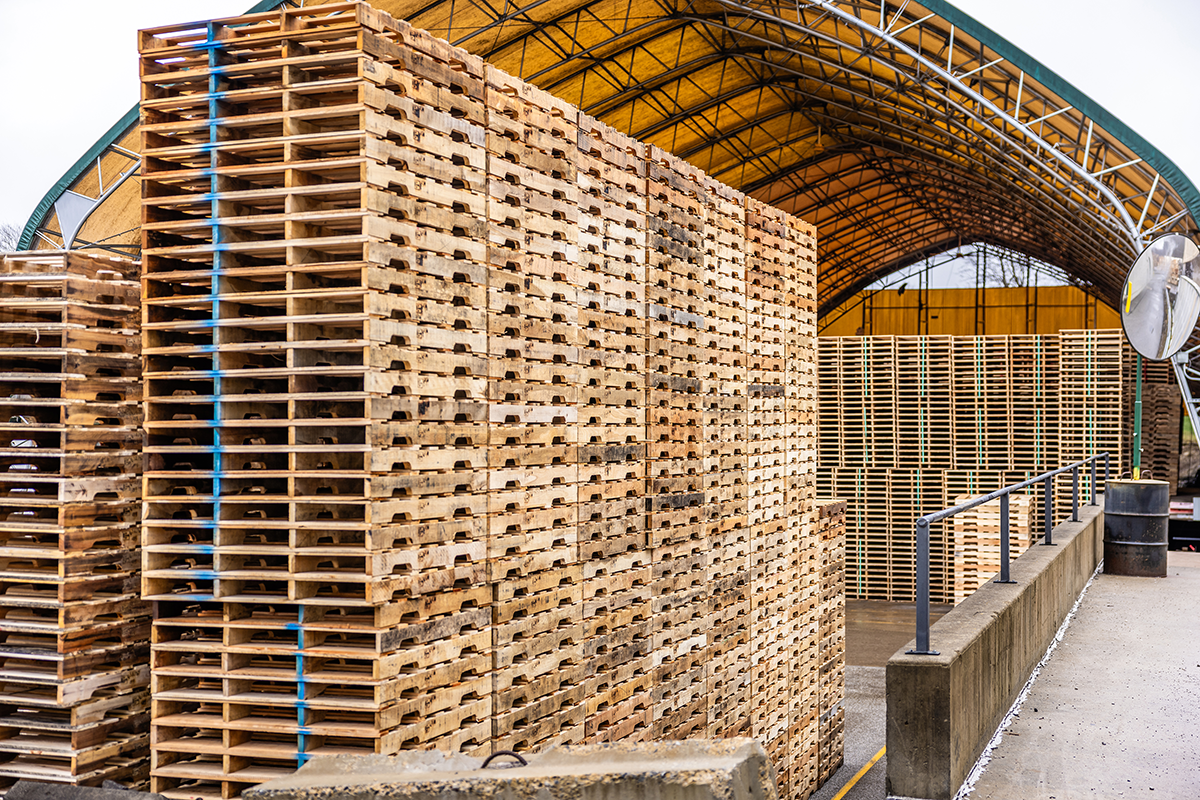
The uniform standard for wood pallets is the foundation of consistency, safety, and efficiency in the U.S. logistics industry.
Created to ensure that pallets perform predictably across warehouses, transportation networks, and distribution centers, the uniform standard protects product quality and reduces supply chain disruptions.
Pallets may look simple, but standardized design and construction guidelines are essential for automation, racking, forklift compatibility, and product safety. Without this standard, the industry would face widespread inefficiencies and operational risks.
Who Created the Uniform Standard for Wood Pallets?
The National Wooden Pallet & Container Association (NWPCA) established the Uniform Standard for Wood Pallets to create consistency in manufacturing and performance across the U.S. pallet industry. Their work helps ensure that pallets meet structural, dimensional, and durability expectations critical for modern supply chains. All pallet standards can be found in this NWPCA resource.
Want to learn more about our partnership with NWPCA? Check out our recent blog.
Why the Uniform Standard for Wood Pallets Matters
Uniformity is essential in logistics. When pallets are consistent in size, strength, and construction, companies benefit from:
Smoother warehouse operations
Predictable load handling
Fewer product damages
Better safety outcomes
Enhanced automation compatibility
For businesses that ship high volumes or work with multiple vendors, standardized pallets ensure that every load is handled consistently.
What the Uniform Standard for Wood Pallets Defines
The uniform standard outlines specific requirements for construction, materials, performance, and allowable variations. These include:
Dimensions and Deck Boards
Standardized thickness, width, spacing, and placement ensure stability and predictable performance.
Materials and Fasteners
The standard specifies acceptable lumber grades and fasteners to ensure pallet durability.
Construction Quality and Allowable Defects
Guidelines prevent issues such as protruding nails, unsound boards, or structural weaknesses.
Load Ratings and Safety Performance
Pallets are tested to withstand specific static, dynamic, and racking loads to protect products and workers.
How the Uniform Standard Improves Automation and Efficiency
Automated warehouses, conveyors, palletizers, and robotic systems depend on consistency. The uniform standard ensures pallets:
Fit the equipment properly
Maintain predictable weight distribution
Avoid jamming or system errors
Support high-speed logistics environments
As automation expands, the importance of pallet uniformity becomes even more critical.
When Do You Need a Uniform Standard Pallet vs. a Custom Pallet?
Uniform standard pallets work for most general-purpose supply chains. However, industries with unique load sizes, weight distribution challenges, or export requirements often benefit from custom pallets tailored to operational needs.
How Olympic Forest Products Ensures Compliance with Uniform Standard Pallets
The uniform standard is the backbone of pallet reliability in the U.S. supply chain. By ensuring consistency and safety it enables smoother operations, better product protection, and stronger warehouse automation performance. Companies that rely on standardized pallets – and on partners who follow these guidelines – gain efficiency, predictability, and long-term value.
Olympic Forest Products follows the Uniform Standard for Wood Pallets across all manufacturing processes. From board selection to construction, inspection, and load testing, Oly ensures every pallet meets or exceeds industry expectations. Our five family-owned mills and national network allow us to deliver consistent, high-quality pallets at scale.
Need support with your pallet sizing compliance? Get in touch with the Olympic Forest Products team.