Raggle Sticks 101: What They Are and Why They Matter
When it comes to pallet performance, most of the attention goes to the obvious elements (e.g., deck boards, stringers, fasteners, and overall dimensions) – but in many cases, it’s the smaller, less visible components that make the difference between a pallet that performs and one that fails.
Raggle sticks are one of those components.
If you’ve come across the term and wondered what they are or whether they matter to your operation, you’re not alone. While not used in every pallet design, raggle sticks can play an important role in improving strength, stability, and overall performance when applied correctly.
In this guide, we’ll break down what raggle sticks are, where they’re used, and how they impact pallet performance in real-world conditions. Let’s dive in.
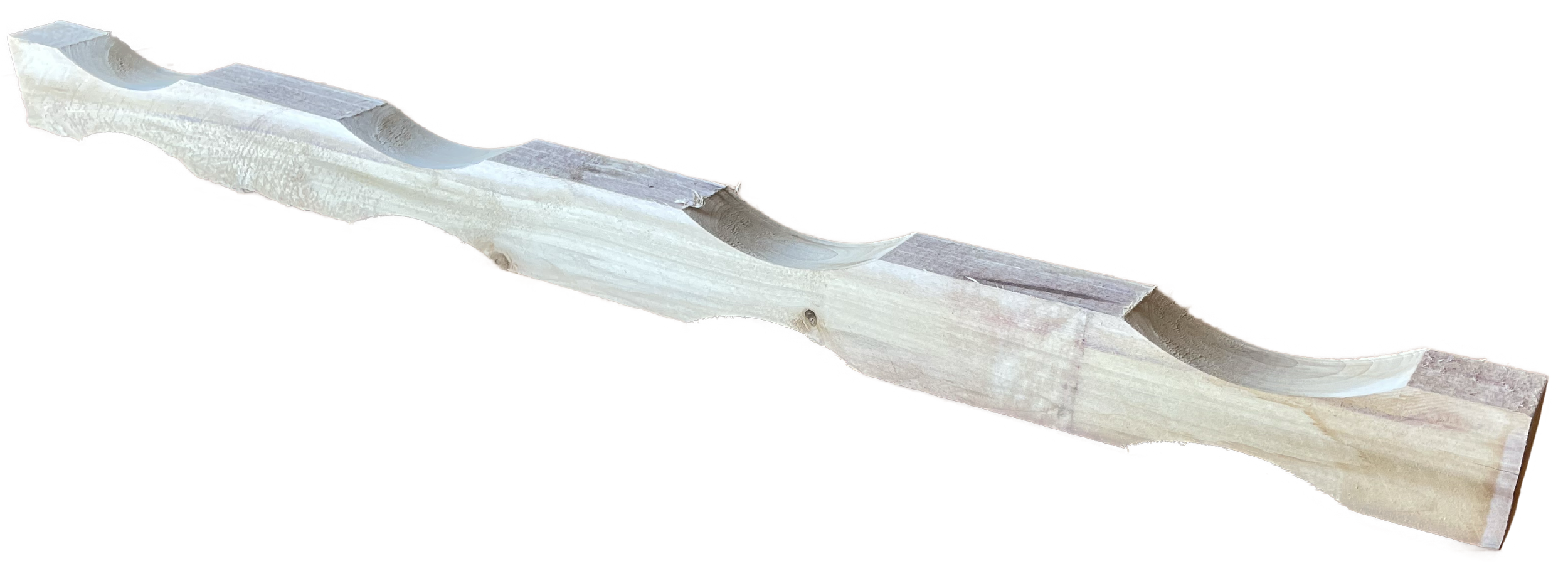
What Are Raggle Sticks?
Raggle sticks are narrow wood components integrated into certain pallet designs to provide additional structural support. They are typically installed between deck boards or along key stress points within the pallet to reinforce the overall structure.
Unlike primary components like stringers or blocks, raggle sticks are not always required. Instead, they are used strategically—added where extra reinforcement is needed to improve a pallet's performance under load.
Because of this, raggle sticks are most commonly found in custom pallet design rather than standard, one-size-fits-all pallets.
How Raggle Sticks Are Used in Pallet Design
Raggle sticks are most often incorporated into pallets designed for more demanding applications, including heavier loads, storage in racking systems, or situations where product stability is critical during transport.
In these cases, raggle sticks are positioned to support areas that experience the most stress. This could include the center span between rack beams, edges where loads tend to shift, or zones where repeated handling places additional strain on the structure.
Their placement is intentional. When used correctly, raggle sticks help the pallet perform more consistently across different stages of the supply chain, from loading and storage to transport and unloading.
Why Raggle Sticks Matter for Pallet Performance
Raggle sticks may be small, but their impact can be significant. Key benefits include:
Improved structural stability
Raggle sticks reinforce key areas of the pallet to distribute weight more evenly and reduce movement—especially important for uneven or shifting loads
Reduced deflection
Raggle sticks provide added support between rack beams, helping prevent deck board sagging under weight
Increased durability
Raggle sticks strengthen high-stress zones, extending pallet lifespan and reducing the need for frequent replacements
Better load containment
Lastly, raggle sticks stabilize the pallet structure to minimize product shifting during transport, reducing damage and improving shipment quality
How Raggle Stick Design Impacts Pallet Performance
Not all raggle sticks deliver the same results. Their effectiveness depends heavily on how they are designed and integrated into the pallet. For one, placement is critical. Adding reinforcement in the wrong location or too much reinforcement in one area acan create imbalances rather than improvements. The goal is to support the pallet where it needs it most, without introducing unnecessary material or cost.
Material selection also plays a role. The type of wood, thickness, and overall construction must align with the pallet’s intended use. A raggle stick that is too thin may not provide meaningful support, while one that is oversized may add weight and cost without delivering proportional benefits.
Most importantly, raggle sticks should never be treated as a standalone solution. They are one component within a larger system, and their design must work in conjunction with the rest of the pallet structure.
When Should You Use Raggle Sticks?
Raggle sticks are not required for every application, but they can be highly beneficial in the right situations. Consider using them when:
Frequent pallet breakage occurs, especially in racking systems where additional support may be needed
Deck boards are sagging or showing deflection under load
Loads are heavy, unevenly distributed, or shifting during transport
Product stability is a concern, increasing the risk of damage
Pallets experience repeated stress from handling, stacking, or environmental conditions
They may not be necessary when:
Loads are light and do not require additional reinforcement
Pallets are used for one-way shipping, where longevity is less critical
The key is understanding when added reinforcement improves performance – and, in contrast, when it simply adds unnecessary cost.
Two Common Misconceptions About Raggle Sticks
The first common assumption is that adding more components automatically results in a stronger pallet. In reality, effective pallet design is about optimization, not overbuilding. Adding raggle sticks without evaluating the full system can lead to unnecessary material costs and increased weight, which may impact shipping efficiency. In some cases, it can even create new stress points if not properly integrated.
A second misconception is that raggle sticks can fix broader performance issues on their own. While they can improve specific aspects of a pallet, they are not a substitute for a well-designed overall structure.
The best results come from a balanced approach where each component, including raggle sticks, is used intentionally as part of a complete design.
Why Raggle Sticks are Part of a Bigger Puzzle
Pallet performance is influenced by a combination of factors, including load weight, product dimensions, handling practices, storage methods, and environmental conditions. Focusing on a single component without considering the full system often leads to incomplete solutions.
This is why leading operations take a more comprehensive approach, evaluating how every element works together to support performance, efficiency, and cost control. In all of this, understanding components like raggle sticks is important, but knowing when and how to use them is what truly drives results.
Find a Pallet Design Expert Who Understands Raggle Stick Use
At Olympic Forest Products, we take a system-wide approach to pallet design. Through our unit load analysis services, we evaluate your pallets in the context of your actual operation—looking at load requirements, handling conditions, racking systems, and more. From there, we design solutions that are tailored to your needs, ensuring every component, whether it’s a raggle stick or a structural beam, is working as intended. If you’re dealing with pallet performance issues or looking to improve efficiency, we can help you identify the right design for your operation.
Connect with Olympic Forest Products to learn how we can optimize your pallet system from the ground up.