How to Calculate Pallet Rack Weight Capacity
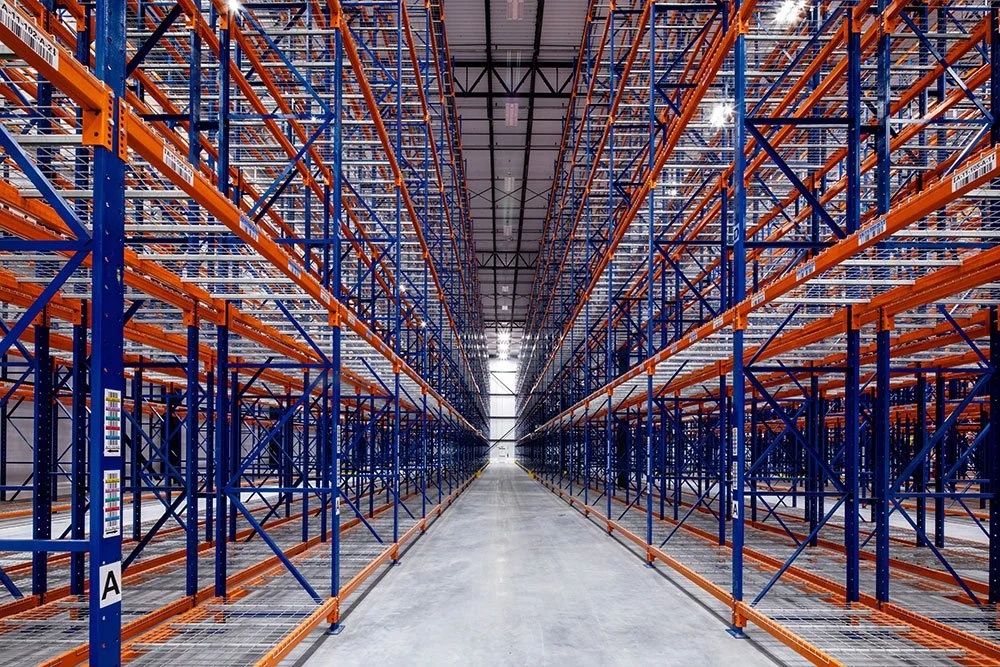
In any warehouse or distribution environment, safety and efficiency depend on one critical factor: knowing your pallet rack weight capacity exactly.
This practice is essential to protecting your team, your inventory, and your bottom line – yet, many operations rely on rough estimates or manufacturer specs alone, without considering how pallets, loads, and real-world conditions affect performance. The result? Increased risk of product damage, inefficient storage, or even structural failure.
In this guide, we’ll walk through how to calculate pallet rack load capacity, what factors influence it, and how to ensure your system is designed for both safety and efficiency.
What Is Pallet Rack Weight Capacity?
Pallet rack weight capacity refers to the maximum load a racking system can safely support. This typically includes multiple components:
The capacity per beam level
The total capacity of the rack system
The weight supported by each individual pallet
While rack manufacturers provide load ratings, these numbers assume ideal conditions (e.g., uniform loads, properly designed pallets, and consistent weight distribution). In reality, your pallet and product configuration play just as important a role in determining how much weight your system can safely handle.
Why Accurate Pallet Rack Weight Capacity Calculations Matter
Misjudging pallet rack weight capacity can have serious consequences. Overloading a system increases the risk of collapse, which can lead to injuries, damaged inventory, and costly downtime. On the other hand, underutilizing your racks due to uncertainty leaves valuable storage space—and revenue—on the table.
Accurate calculations allow you to strike the right balance. When your system is properly evaluated, you can confidently maximize storage density, improve workflow efficiency, and reduce unnecessary costs associated with damaged goods or excess materials.
5 Factors That Impact Pallet Rack Weight Capacity
Calculating pallet rack load capacity requires more than reading a spec sheet. Several variables influence how much weight your system can safely support.
1. Pallet Design and Construction
The pallet itself is often the most overlooked factor in rack performance. Wood species, deck board thickness, fastener quality, and overall construction all determine how a pallet behaves under load. A poorly designed pallet may sag between rack beams or fail under stress, even if the rack itself is rated for higher capacities.
2. Load Weight and Distribution
Not all loads behave the same way. Evenly distributed loads are far easier for both pallets and racks to support, while point loads—where weight is concentrated in a specific area—create stress that can lead to failure. Understanding how your product sits on the pallet is just as important as knowing its total weight.
3. Rack System Specifications
Beam length, beam thickness, and upright frame strength all contribute to overall rack capacity. Longer spans between supports increase deflection risk, while heavier-duty components can support greater loads. Manufacturer ratings provide a baseline, but they must be considered alongside real-world usage.
4. Racking Configuration
Different racking systems are designed for different applications. Selective racks, drive-in systems, and push-back racks all distribute weight differently. The configuration you use affects how loads are supported and how stress is applied across the system.
5. Environmental Conditions
Environmental factors—especially moisture—can significantly impact pallet performance. Wood pallets absorb and release moisture depending on their surroundings, which can affect both weight and structural integrity. This is particularly important for operations involving outdoor storage or international shipping.
How to Calculate Pallet Rack Load Capacity in 5 Steps
Now, let’s dive into the real reason you clicked on this blog post – to find out how to calculate pallet rack load capacity. The process involves evaluating both your racking system and the pallets supporting your product.
Step 1: Start by identifying the manufacturer’s load ratings for your rack system. These ratings establish the maximum capacity under ideal conditions and should never be exceeded.
Step 2: Determine the total weight of each loaded pallet, including both the product and the pallet itself. This step is critical, as even small variations in weight can add up across multiple levels.
Step 3: Assess how the load is distributed. Even loads are easier to support, while uneven or concentrated loads require more conservative calculations.
Step 4: Once you understand the load characteristics, evaluate whether your pallets are designed to handle that weight across the span of your rack beams. Pallets that deflect or sag under load can compromise the entire system, regardless of rack capacity.
Step 5: With this information, you can calculate the total load per rack level by multiplying the weight per pallet by the number of pallets stored on that level. However, it’s important to apply a safety margin rather than operating at full capacity. Real-world conditions are rarely perfect, and a buffer helps account for variability in materials, handling, and environmental factors.
3 Common Mistakes When Calculating Pallet Rack Weight Capacity
Many issues arise from oversimplifying the rack weight process.
These common issues include:
1. Not All Pallets Perform the Same Way
One of the most common mistakes is assuming that all pallets are equal in performance. In reality, pallet quality and design vary widely, and using the wrong pallet can significantly reduce your system’s safe capacity.
2. Pallet Conditions Vary
Another frequent oversight is ignoring the pallet’s condition. Even well-designed pallets degrade over time, and damaged pallets are far more likely to fail under load. This includes moisture content, which is a commonly overlooked factor. Changes in humidity can alter both the weight and strength of wood pallets, particularly in environments with fluctuating conditions and ultimately leading to moldy pallets.
3. Ignoring How Pallets Interact with the System
Finally, many operations rely solely on rack specifications without considering how the pallet and load interact with the system. This incomplete view can lead to inaccurate calculations and increased risk.
The Hidden Role of Pallets in Rack Safety
While racking systems are engineered for strength, they don’t operate in isolation. The pallet is the direct interface between your product and the rack, making it a critical component of overall system performance.
In many cases, pallet failure—not rack failure—is what causes issues. A pallet that bends excessively or collapses under load can destabilize the entire system, even if the rack itself is within its rated capacity.
This is why evaluating pallet design is just as important as understanding rack specifications. Without the right pallet, even the strongest racking system can become a liability.
How Unit Load Analysis Improves Accuracy and Safety
Because so many variables affect pallet rack weight capacity, many operations benefit from a more advanced approach: unit load analysis. Unit load analysis evaluates the entire system—pallet, product, and racking environment—to determine how everything performs together. Instead of relying on assumptions, this process uses data, testing, and engineering principles to identify the most effective and efficient design.
By taking a comprehensive view, unit load analysis helps uncover opportunities to improve safety, reduce material costs, and optimize overall performance. It ensures that every component in your system is working together as intended.
Optimize Your Warehouse with the Right Pallet Design
At Olympic Forest Products, we specialize in helping businesses go beyond standard pallet solutions. Through our unit load analysis services, our experts evaluate your pallets, products, and racking systems to design solutions that are tailored to your operation. Using advanced software and industry-leading testing, we help you improve safety, reduce product damage, and maximize efficiency without unnecessary costs.
If you’re unsure whether your current pallets are supporting—or limiting—your operation, our team is here to help. Connect with Olympic Forest Products to learn more about our unit load analysis services and how we can optimize your system from the ground up.