What is Pallet Buy Back?
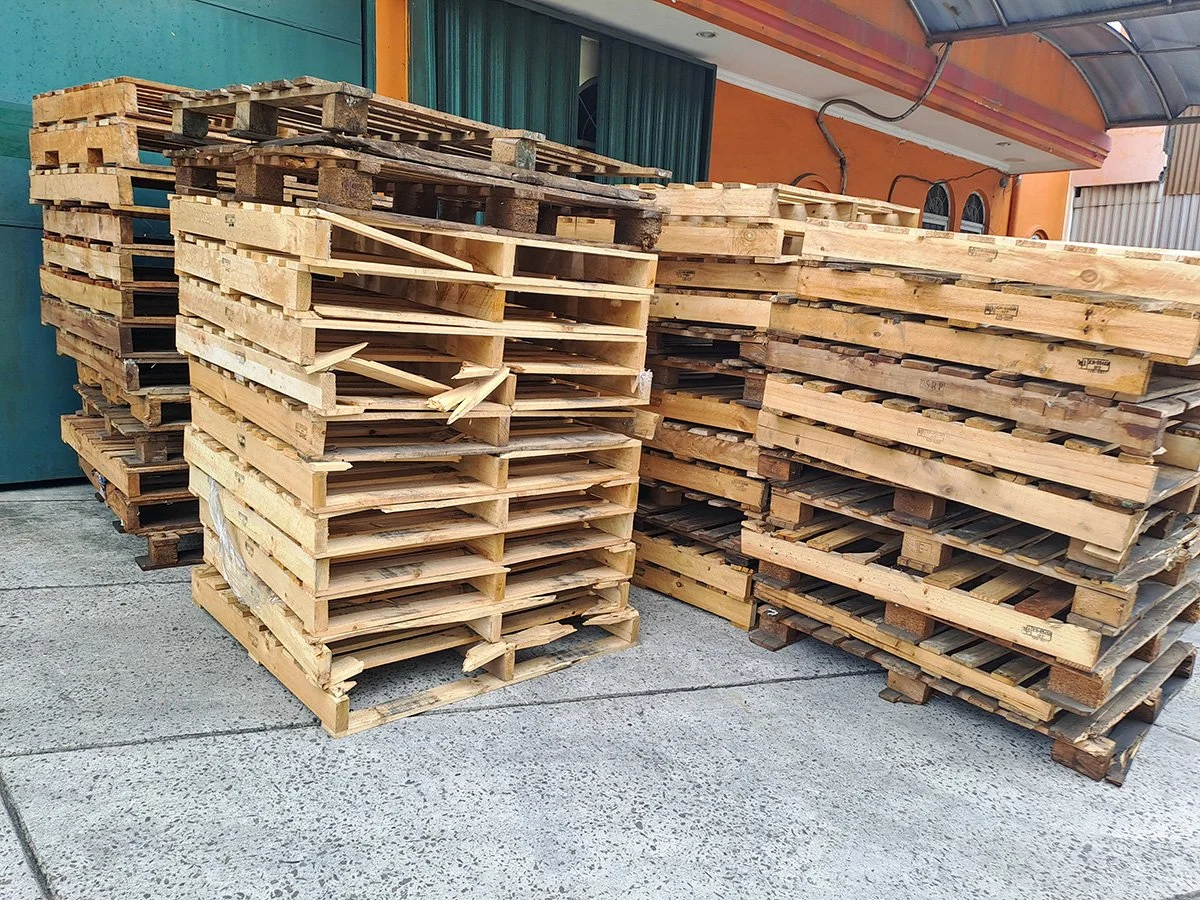
Empty pallets can pile up quickly.
They take up valuable warehouse or yard space, create extra handling work, and may eventually be discarded—even when some of them still have useful life or recoverable value.
A pallet buy back program offers another option. Depending on the pallets and the needs of the program, a pallet company may collect eligible used pallets for reuse, repair, recycling, or resale.
Here’s how pallet buy back works and what determines whether your used pallets have value.
How Does Pallet Buy Back Work?
In a typical pallet buy back program, a business accumulates empty pallets after receiving raw materials, components, or finished goods. A pallet provider evaluates those pallets and determines whether they can be recovered economically.
The process may include:
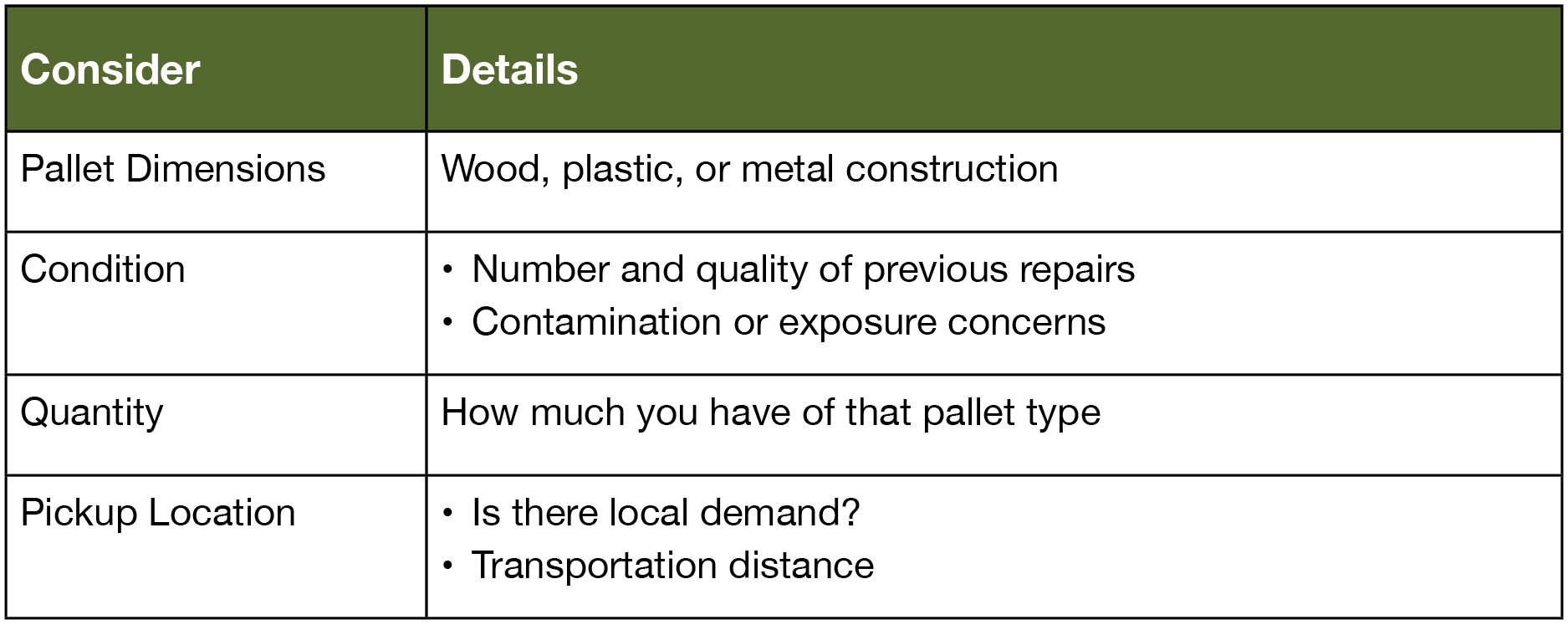
Reviewing pallet sizes, types, and quantities
Evaluating their condition
Confirming the pickup location and frequency
Estimating transportation, sorting, and repair requirements
Collecting eligible pallets
Inspecting, repairing, reusing, or recycling them
Depending on the arrangement, the business may receive payment or credit for qualifying pallets. In other situations, the main benefit may be reliable removal, reduced disposal expense, or reclaimed warehouse space.
Every pallet buy back program is different. Pallet value depends on more than simply having a stack ready for pickup.
What Types of Pallets Can Be Bought Back?
Standard, reusable pallets generally have the greatest potential value because there is more demand for them.
The common 48-by-40-inch GMA pallet is often a strong candidate for recovery. Other pallet sizes may also have value if there is an active market or a specific customer who can reuse them.
Considerations for a pallet company to buy back pallets:
Custom pallets can be more difficult to place because they were designed for a specific product or application. However, they may still be useful in a closed-loop program or as a source of repair material.
Are All Used Pallets Worth Money?
No. Not every used pallet has a positive resale value.
A pallet may have little or no buy-back value if it is:
Severely broken
Contaminated
Wet, moldy, or chemically exposed
An uncommon or undesirable size
Constructed too lightly for reuse
Located too far from an economical recovery route
Available only in a very small quantity
Transportation plays a major role. A stack of usable pallets may have value, but sending a truck a long distance to retrieve a few units can cost more than the pallets are worth.
That’s why volume, location, and pickup frequency matter alongside pallet condition.
What Happens to the Pallets After Pickup?
Recovered pallets are generally sorted by size, type, and condition.
Pallets that are still serviceable may be returned to use. Those with repairable damage can have damaged boards or components replaced before being inspected and placed back into circulation.
Pallets that are beyond economical repair can still provide useful material. Serviceable components may be salvaged for future repairs, while unusable wood may be processed into products such as mulch, animal bedding, or fuel where local facilities allow.
Olympic Forest Products’ pallet repair and recovery services are built around this kind of assessment. The objective is to keep useful materials in circulation and reduce unnecessary waste.
Pallet Buy Back vs. Pallet Retrieval
The terms “pallet buy back” and “pallet retrieval” are sometimes used interchangeably, but they can describe different arrangements.
In a pallet buy back program, a provider may purchase eligible pallets that are currently owned by the customer.
In a retrieval program, the provider collects pallets on behalf of their owner and returns them to an existing pallet program. The pallets may be inspected, repaired, and delivered back to the original company for reuse.
Retrieval is often a good fit for closed-loop supply chains where pallets move between known facilities. Buy back may be more appropriate when a company regularly receives pallets it does not need to retain.
Some businesses can benefit from both approaches.
6 Benefits of a Pallet Buy Back Program
A well-designed pallet buy back program may help your business:
1. Free Up Space
Scheduled pickups prevent empty pallets from consuming valuable dock, warehouse, or yard space.
2. Reduce Disposal Costs
Recoverable pallets may be removed from the waste stream, reducing the volume of material your company must discard.
3. Generate Value or Credits
Eligible pallets may provide direct buy-back value or a credit toward other pallet services, depending on the program.
4. Improve Safety and Organization
Large, disorganized stacks of empty or damaged pallets can interfere with normal operations. Regular removal helps maintain a cleaner, more manageable facility.
5. Support Sustainability Goals
Repairing and reusing pallets extends their useful lives. Recycling pallets that cannot be repaired helps recover material instead of treating the entire pallet as waste.
6. Create a More Reliable Process
An established program replaces occasional, last-minute removal with planned pickups, defined acceptance standards, and clearer reporting.
Is Pallet Buy Back Right for Your Business?
A pallet buy back program may be worth exploring if your business:
Regularly accumulates empty pallets
Receives significant quantities of standard-size pallets
Pays to dispose of unwanted pallets
Has limited space for pallet storage
Wants to improve reuse and recycling
Needs a consistent pickup schedule
Operates multiple facilities with uneven pallet supply
Before setting up a program, collect some basic information. Note how many pallets you generate, their dimensions, their general condition, how quickly they accumulate, and where they are located. Photos can also help a pallet provider perform an initial review.
Turn Unwanted Pallets Into an Opportunity
Used pallets do not automatically belong in the dumpster, and they do not all carry the same value. Two things can be true! The right pallet buy back or recovery program begins with an honest assessment of pallet condition, quantity, location, transportation, repair potential, and market demand.
Olympic Forest Products can help evaluate your used pallets and determine whether buy back, retrieval, repair, recycling, or a combination of services makes the most sense for your operation.
Contact Olympic Forest Products to discuss your pallet recovery needs.